


English



Paperback
₹3548
₹4585
22.62% OFF
(All inclusive*)
Delivery Options
Please enter pincode to check delivery time.
*COD & Shipping Charges may apply on certain items.
Review final details at checkout.
Looking to place a bulk order? SUBMIT DETAILS
Delivery Options
Please enter pincode to check delivery time.
*COD & Shipping Charges may apply on certain items.
Review final details at checkout.
About The Book
Description
Author
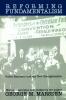
<I>This is a&#160;<a href=http://www.eerdmans.com/Pag%20es/About/Books-on-%20Demand.aspx>print on demand</a>&#160;book and is therefore non- returnable.</I><BR /><BR /> &quot;The best telling of the story of the past&quot; writes George Marsden &quot;relies on a balance of the general and the particular.&quot; In this book a sequel and companion to his widely acclaimed&#160;<I>Fundamentalism and American Culture</I>&#160;(Oxford 1980) Marsden uses the history of Fuller Theological Seminary &mdash; a durable evangelical institution &mdash; as a lens through which to focus an examination of the broader story of evangelicalism and fundamentalism since the 1940s.<BR /><BR /> In fact at the time of the school&#39;s founding in 1947 &quot;evangelicalism&quot; and &quot;fundamentalism&quot; were not considered separate entities. Though Fuller Seminary later became so thoroughly identified with the &quot;new evangelicalism&quot; (or neo- evangelicalism) that its fundamentalist roots are sometimes overlooked in the school&#39;s early years it was in striking ways a fundamentalist institution with a thoroughly fundamentalist constituency.<BR /><BR /> Marsden&#39;s detailed history relies heavily on primary sources: personal recollections and correspondence of the seminary&#39;s founders and discussions with students and staff from throughout the seminary&#39;s history. Although the story of Fuller Seminary provides the framework for this fascinating look at a segment of American religious history Marsden&#39;s careful and knowledgeable attention to the surrounding worlds of mainline denominations and stricter fundamentalism makes this book a major contribution to the study of a movement that has played an important role in shaping American culture.

Piracy-free

Assured Quality

Secure Transactions

Fast Delivery

Sustainably Printed
Details
ISBN 13
9780802808707
Publication Date
-05-04-1995
Pages
-344
Weight
-467 grams
Dimensions
-152x229x19.51 mm
