


This Book is Out of Stock!
English


Hardback
₹11654
(All inclusive*)
Delivery Options
*COD & Shipping Charges may apply on certain items.
Review final details at checkout.
Looking to place a bulk order? SUBMIT DETAILS
*COD & Shipping Charges may apply on certain items.
Review final details at checkout.
₹11654
Out Of Stock
All inclusive*
About The Book
Description
Author(s)
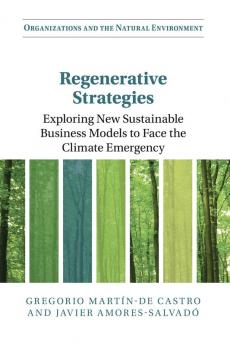
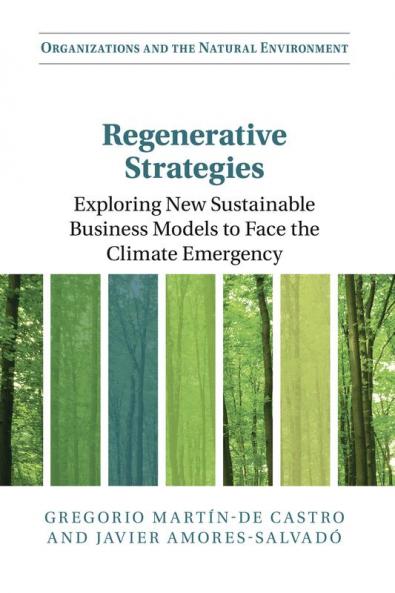
In the current climate emergency it is no longer enough for businesses to simply employ environmental strategy typologies focused on ''greening the business'' and maintaining the ''business-as-usual'' logic. Gregorio Martn-de Castro and Javier Amores-Salvad argue that disruptive business models and solutions are now required and they propose a new regenerative strategy linking climate science to management studies.The main features of this strategy are:cutting-edge climate science solutions(capturing and utilizing atmospheric carbon dioxide to produce net-zero or net-negative emissions and positive environmental externalities) anda redefined firm purpose under an ecological ethical and moral paradigm(integrating ecoemotional wealth environmental performance systemic socioecological resilience wider stakeholder management and a very long-term perspective). They demonstrate that by applying this strategy companies can not only reduce their negative environmental externalities and create positive environmental externalities but also reverse current environmental degradation through a new sustainable capitalism.

Piracy-free

Assured Quality

Secure Transactions

Fast Delivery

Sustainably Printed
Details
ISBN 13
9781009261937
Publication Date
-04-03-2024
Pages
-262
Weight
-448 grams
Dimensions
-152.4x228.6x15.46 mm
