

English


Paperback
₹1765
(All inclusive*)
Delivery Options
Please enter pincode to check delivery time.
*COD & Shipping Charges may apply on certain items.
Review final details at checkout.
Looking to place a bulk order? SUBMIT DETAILS
Delivery Options
Please enter pincode to check delivery time.
*COD & Shipping Charges may apply on certain items.
Review final details at checkout.
About The Book
Description
Author
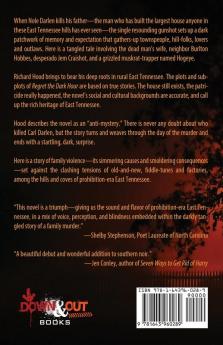
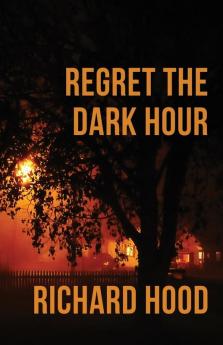
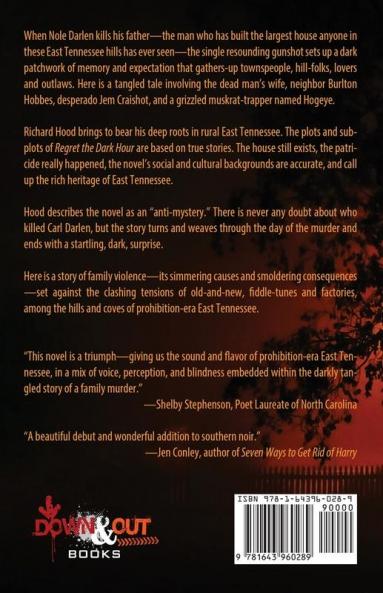
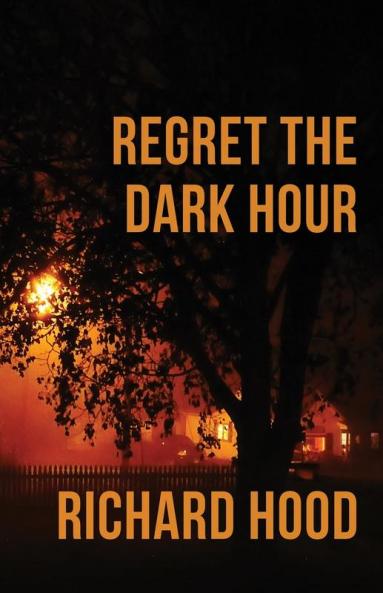
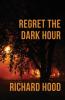
<p>When Nole Darlen kills his father&mdash;the man who has built the largest house anyone in these East Tennessee hills has ever seen&mdash;the single resounding gunshot sets up a dark patchwork of memory and expectation that gathers-up townspeople hill-folks lovers and outlaws. Here is a tangled tale involving the dead man&rsquo;s wife neighbor Burlton Hobbes desperado Jem Craishot and a grizzled muskrat-trapper named Hogeye.<br /><br />Central to the story is a pistol that Nole Darlen has taken from a card game the night before the murder. The pistol becomes a totem to Nole an embodiment of the frustrations and failures that have dogged his life. He envies and fears the outlaw Jem Craishot wishing he too could be &ldquo;fearsome&rdquo; but descends instead into cowardice and betrayal. Eventually the gun becomes a central element of the novel&rsquo;s twisted story a talisman of murder and a key to the book&rsquo;s shocking ending.<br /><br />Richard Hood brings to bear his deep roots in rural East Tennessee. The plots and subplots of <em>Regret the Dark Hour</em> are based on true stories. The house still exists the patricide really happened the outlaw&mdash;Jem Craishot&mdash;is based upon the legendary Kinny Wagner whose exploits derive from this time and region. The novel&rsquo;s social and cultural backgrounds are accurate and call-up the rich heritage of East Tennessee.<br /><br />The novel has been called &ldquo;Southern Gothic Noir&rdquo; and Hood describes it as an &ldquo;anti-mystery.&rdquo; There is never any doubt about who killed Carl Darlen but the story turns and weaves through the day of the murder and ends with a startling dark surprise.<br /><br />Here is a story of family violence&mdash;its simmering causes and smoldering consequences&mdash;set against the clashing tensions of old-and-new fiddle-tunes and factories among the hills and coves of prohibition-era East Tennessee.<br /><br />Praise for REGRET THE DARK HOUR:<br /><br />&ldquo;Richard Hood&rsquo;s <em>Regret the Dark Hour</em> is a search for Regional Truth and the ways memory representation and history intertwine to produce stories interpretation and character. This novel is a triumph&mdash;giving us the sound and flavor of prohibition-era East Tennessee in a mix of voice perception and blindness embedded within the darkly tangled story of a family murder.&rdquo; &mdash;Shelby Stephenson Poet Laureate of North Carolina and author of <em>Paul&rsquo;s Hill: Homage to Whitman</em> <em>Our World</em> and <em>Nin&rsquo;s Poem</em><br /><br />&ldquo;<em>Regret the Dark Hour</em> calls up a story of betrayal forbidden love and familial violence in prohibition-era Appalachia. Hood&rsquo;s stunning and lyrical writing vividly captures the world of this forgotten time period. A beautiful debut and wonderful addition to southern noir.&rdquo; &mdash;Jen Conley author of <em>Seven Ways to Get Rid of Harry</em></p>

Piracy-free

Assured Quality

Secure Transactions

Fast Delivery

Sustainably Printed
Details
ISBN 13
9781643960289
Publication Date
-05-08-2019
Pages
-334
Weight
-394 grams
Dimensions
-140x216x19.91 mm
