








₹4579
₹5629
18.65% OFF
(All inclusive*)
Paperback
Delivery Options
Please enter pincode to check delivery time.
*COD & Shipping Charges may apply on certain items.
Review final details at checkout.
Looking to place a bulk order? SUBMIT DETAILS
Delivery Options
Please enter pincode to check delivery time.
*COD & Shipping Charges may apply on certain items.
Review final details at checkout.
About The Book
Description
Author
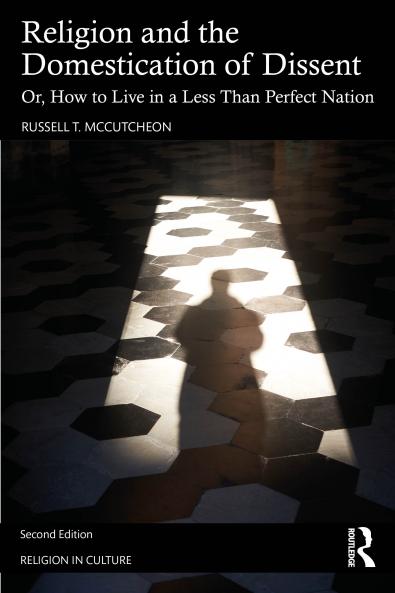
<p>In its first edition <i>Religion and the Domestication of Dissent </i>focused on the representations of Islam that circulated in the wake of the 9/11 attacks—representations that scholars pundits and politicians alike used either to essentialize and demonize it or instead to isolate specific aspects as apolitical and thus tolerable faith. This little book’s larger thesis therefore argued for how the classifications that we routinely use to identify and thereby negotiate our social worlds—notably such categories as “religion” or “faith”—are explicitly political.</p><p>This new edition which updates the first and adds a new closing chapter continues to be relevant today—a time when assertions concerning supposedly authentic and homogenous identities (whether shared by “us” or “them”) continue to animate a variety of public debates where the stakes remain high. Thinking back on how Islam was often portrayed in scholarship and popular media in western Europe and North America offers lessons for how debates today unfold on such topics as Christian nationalism—a designation now prominent among pundits intent on identifying the proper and improper ways in which religion intersects with modern political life. But it is this very distinction (between religion and politics) that ought to be attracting our attention if we are interested not in which way of being religious is right or reasonable but instead in determining why some social groups are known as religious in the first place. Seeing the latter question as linked to studying how socially formative categories function in liberal democracies <i>Religion and the Domestication of Dissent </i>offers an anthropology of the present when the longstanding mechanisms of liberal governance seem to be under threat.</p>

Piracy-free

Assured Quality

Secure Transactions

Fast Delivery

Sustainably Printed
Details
ISBN 13
9781032898261
Publication Date
-27-06-2025
Pages
-228
Weight
-330 grams
Dimensions
-155.96x233.93x12.31 mm
