

English


Hardback
₹12909
₹18143
28.85% OFF
(All inclusive*)
Delivery Options
Please enter pincode to check delivery time.
*COD & Shipping Charges may apply on certain items.
Review final details at checkout.
Looking to place a bulk order? SUBMIT DETAILS
Delivery Options
Please enter pincode to check delivery time.
*COD & Shipping Charges may apply on certain items.
Review final details at checkout.
About The Book
Description
Author(s)
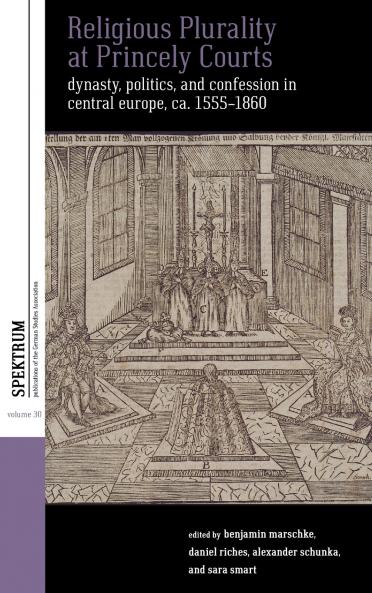
<p> Early modern European monarchies legitimized their rule through dynasty and religion where ideally the divine right of the ruler corresponded with the official confession of the territory. It has thus been assumed that at princely courts only a single confession was present. However the reality of the confessionalization paradigm commonly involved more than one faith. <em>Religious Plurality at Princely Courts</em> explores the reverberations of bi-confessional or multi-confessional intra-Christian settings at courts on dynastic symbolic diplomatic artistic and theological levels addressing a significant neglected understanding of interreligious dialogue religious change and confessional blending. Incorporating perspectives across European studies such as domestic and international politics dynastic strategies the history of ideas women's and gender history and material culture the contributions to this volume highlight the intersections of religious plurality at court.</p>

Piracy-free

Assured Quality

Secure Transactions

Fast Delivery

Sustainably Printed
Details
ISBN 13
9781805394877
Publication Date
-01-04-2024
Pages
-270
Weight
-458 grams
Dimensions
-152x229x15.88 mm
