


English



Hardback
₹15321
₹18960
19.19% OFF
(All inclusive*)
Delivery Options
Please enter pincode to check delivery time.
*COD & Shipping Charges may apply on certain items.
Review final details at checkout.
Looking to place a bulk order? SUBMIT DETAILS

Piracy-free

Assured Quality

Secure Transactions
About The Book
Description
Author
Shoutouts
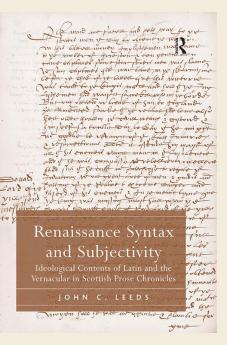
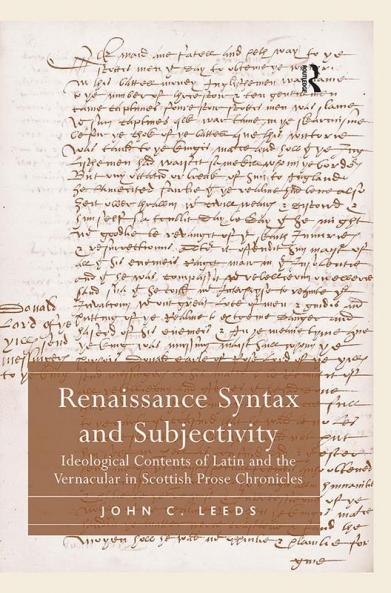
The relationship between Latin and the Scots vernacular in the chronicle literature of 16th-century Scotland provides the topic for this study. John Leeds here shows how the disposition of grammatical subjects in the radically dissimilar syntactic systems of humanist neo-Latin and Scots conditions the way in which the subject (i.e. the human individual) and its actions are conceived in the writing of history. In doing so he extends the boundaries of existing critical literature on early modern subjectivity to include the subject of grammar analyzing its incorporation into narrative sentences and illuminating the ideological contents of different systems for its deployment. Though focused on the chronicles of Renaissance Scotland the argument can in principle be applied to the entire range of Latin-vernacular relations during the early modern period. While examining the intellectual culture of early modernity Leeds also takes aim at every stage of his argument at the semiotic and social-constructionist orthodoxies that dominate the humanities today. Against the notion that human subjects are discursive constructs he argues for the subordination of discourse to realities both material and immaterial that are external to language. As part of this argument he proposes a view of neo-Latin humanism as a resistance to the onset of modernity arguing that Latin prose provides options (at once syntactic ideological and ontological) that vernacular culture has to its considerable detriment foreclosed. In sum Leeds advocates a renewed and theoretically-informed commitment to the humanism that the humanities themselves have been at such pains during the last scholarly generation to depreciate.
Piracy-free
Assured Quality
Secure Transactions
Delivery Options
Please enter pincode to check delivery time.
*COD & Shipping Charges may apply on certain items.
Review final details at checkout.
Details
ISBN 13
9780754658122
Publication Date
-24-02-2010
Pages
-246
Weight
-447 grams
Dimensions
-156x234x14.64 mm
