

English


Paperback
₹1792
₹1850
3.14% OFF
(All inclusive*)
Delivery Options
Please enter pincode to check delivery time.
*COD & Shipping Charges may apply on certain items.
Review final details at checkout.
Looking to place a bulk order? SUBMIT DETAILS
Delivery Options
Please enter pincode to check delivery time.
*COD & Shipping Charges may apply on certain items.
Review final details at checkout.
About The Book
Description
Author
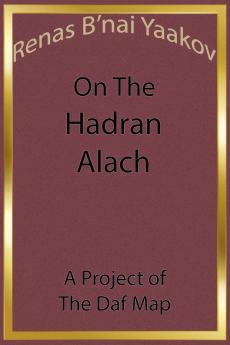
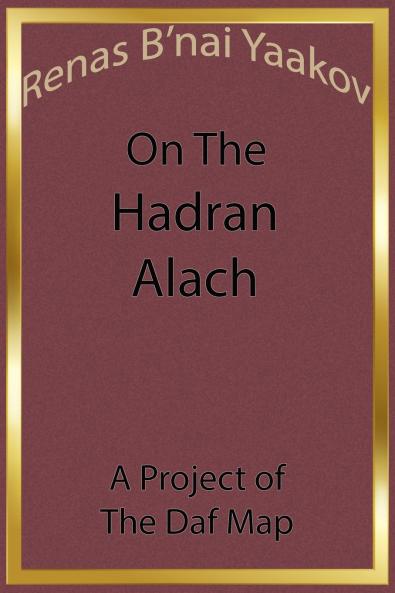
<p>WHAT IS A <em>SIYUM</em>? I thought you would never ask. I know many people believe it is just another opportunity for us Jews to have a party and eat some food. In a sense this is partially true however as with everything in Judaism there are methods and reasons behind everything we do. Let us explore some of those together. However before we begin we need to learn what a <em>siyum </em>is when we make one and on what occasions. The word comes from the Hebrew word סים (<em>sayam</em>) which means to conclude. When we take on a major undertaking and finish it that is an appropriate time to fete the milestone. When we are learning and then conclude a <em>Masechta</em> of Gemara (Bavli or Yerushalmi) or a <em>seder</em> of Mishnayos it is also an occasion to celebrate. We do so with special prayers that have special and cryptic meanings and a festive meal to which we invite some participants. This ceremony of concluding the section of what we learned is called a <em>siyum </em>(conclusion). The prayers we recite are called the <em>Hadran</em> (after the first word of the prayers we say) and we add to that the special <em>Kaddish HaGadol</em> that is said at the conclusion of the <em>Hadran</em>.</p><p>&nbsp;&nbsp;&nbsp;&nbsp;&nbsp;&nbsp;&nbsp;&nbsp;&nbsp;&nbsp;&nbsp;You may have attended a <em>siyum</em> or two and had numerous questions but did not know where to turn or whom to ask for answers and explanations. For example what do those prayers mean? Why do we mention Rav Pappa and his ten sons? Who were they? What is that long <em>Kaddish</em> that we say at the end? With the help from the Big Boss I hope to answer these questions and share with you the little bit of knowledge I have gleaned on the subject over the years.</p><p>We know that no matter how well we studied any material there is much more to learn and delve into; nevertheless yours is still a major accomplishment that should be commemorated and celebrated with friends and family. We are going to discuss how to do it properly according to <em>halacha</em> so that it has a deeper spiritual meaning.</p><p>&nbsp;&nbsp;&nbsp;&nbsp;&nbsp;&nbsp;&nbsp;&nbsp;&nbsp;&nbsp;&nbsp;Typically one makes a <em>siyum</em> after the completion of one of the following:</p><ul><li>When finishing the entire Chumash with at least one major commentary.[1]</li><li>When completing one of the Nevi'im with the commentary of one of the Rishonim.[2]</li><li>A <em>seder</em> of Mishnayos</li><li>After completing the entire six Orders of Mishnayos</li><li>A <em>Masechta</em> of Talmud Bavli</li><li>A <em>Masechta</em> of Talmud Yerushalmi</li><li>After completing the entire Talmud Bavli</li><li>After completing the entire Talmud Yerushalmi</li><li>After the completion of a complete section of Shulchan Aruch</li><li>Learning the whole of Rambam's Mishnah Torah</li><li>Reading through all the Zohar even if he did not understand it.</li></ul><p></p><p>[1] Iggros Moshe; Orach Chaim 1:157</p><p>[2] Ibid.</p>

Piracy-free

Assured Quality

Secure Transactions

Fast Delivery

Sustainably Printed
Details
ISBN 13
9781736033159
Publication Date
-06-11-2024
Pages
-244
Weight
-336 grams
Dimensions
-152x229x13.04 mm
