

English


Paperback
₹1784
₹1920
7.08% OFF
(All inclusive*)
Delivery Options
Please enter pincode to check delivery time.
*COD & Shipping Charges may apply on certain items.
Review final details at checkout.
Looking to place a bulk order? SUBMIT DETAILS
Delivery Options
Please enter pincode to check delivery time.
*COD & Shipping Charges may apply on certain items.
Review final details at checkout.
About The Book
Description
Author
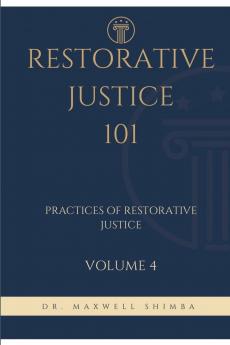
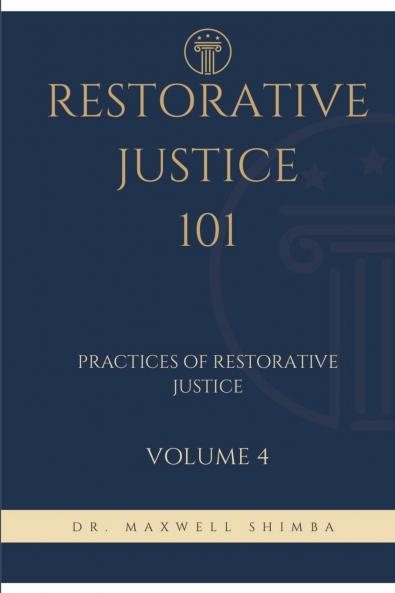
<p>Restorative Justice 101</p><h3>Reimagining Justice for a Changing World</h3><p>The concept of justice has guided societies for millennia shaping laws cultures and the very fabric of human relationships. Yet as the world becomes more interconnected and diverse our traditional models of justice have increasingly shown their limitations. Courtrooms brimming with unresolved conflict classrooms struggling under punitive discipline and communities fractured by cycles of harm and alienation-all speak to a pressing need for a new vision. <em>Restorative Justice: Practices of Restorative Justice</em> emerges in response to this need offering a fresh paradigm rooted in healing accountability and collective well-being.</p><p>Restorative justice is not merely an alternative to retributive justice-it is a profound shift in perspective. Where conventional systems often ask What rule was broken? Who broke it? How should they be punished? restorative justice asks Who was harmed? What are their needs? Who is responsible for repairing the harm? At its heart restorative justice places people-not just laws or procedures-at the center. It values dialogue over judgment empathy over exclusion and relationships over rigid processes.</p><p>This book is born out of both scholarship and practice. Having worked alongside educators legal professionals community leaders and countless individuals seeking to repair harm I have witnessed the transformative power of restorative justice in action. Its roots run deep drawing on indigenous traditions from around the globe and the collective wisdom of communities who have always understood that true justice must heal as well as hold accountable. Today restorative justice is finding new life in schools workplaces neighborhoods and courtrooms-adapting and evolving to meet the challenges of our complex world.</p><p>The journey ahead is both practical and philosophical. In these pages you will encounter foundational principles tested strategies and real-life case studies illustrating restorative justice at work. You will discover how restorative practices can help educators create safer more supportive learning environments; how legal professionals can foster accountability and genuine healing for both victims and offenders; and how community organizers can rebuild trust foster inclusion and address harm at its roots. Special attention is given to the unique challenges of applying restorative practices in the digital age in culturally diverse contexts and in situations marked by trauma or inequality.</p><p>Yet this is not a story of instant solutions. Implementing restorative justice requires courage patience and a willingness to confront difficult truths. It means acknowledging our shared humanity-the wounds we carry the mistakes we make and the hope we hold for something better. Restorative justice asks us to listen deeply to learn from those with different experiences and to persist in the face of resistance. It challenges us to see justice not as a fixed outcome but as an ongoing process of repair reconciliation and renewal.</p><p>As you embark on this journey I invite you to approach these chapters not just as information but as an invitation. Whether you are an educator seeking new disciplinary tools a legal professional yearning for alternatives to adversarial systems a community leader working for reconciliation or simply a concerned citizen this book is for you. You are part of a growing movement-one that is reimagining justice for a changing world and daring to believe that healing is possible even in the aftermath of harm.</p><p>Let us step forward together equipped with knowledge empathy and hope. The practice of restorative justice holds the promise of stronger communities deeper relationships and a justice system that truly serves all.</p>

Piracy-free

Assured Quality

Secure Transactions

Fast Delivery

Sustainably Printed
Details
ISBN 13
9798349387517
Publication Date
-31-05-2025
Pages
-344
Weight
-467 grams
Dimensions
-152x229x18.2 mm
