


English



Paperback
₹1596
₹1730
7.75% OFF
(All inclusive*)
Delivery Options
Please enter pincode to check delivery time.
*COD & Shipping Charges may apply on certain items.
Review final details at checkout.
Looking to place a bulk order? SUBMIT DETAILS

Piracy-free

Assured Quality

Secure Transactions
About The Book
Description
Author
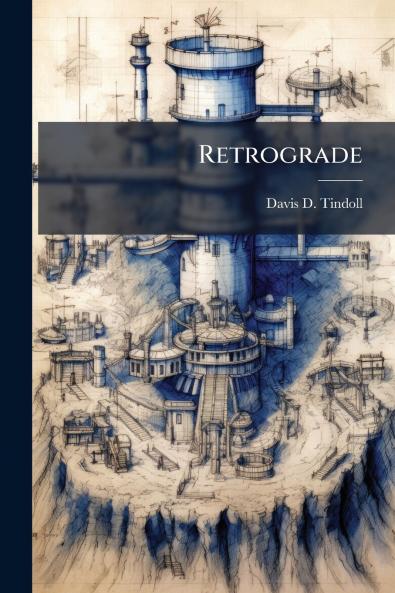
<p>This study investigates the criteria an operational commander must examine to decide if he should conduct a voluntary retrograde operation. The Army's current doctrine addresses how to conduct a retrograde but not why. The aim of this study is to demonstrate why a retrograde operation could be an important tool used by an operational commander to orchestrate his campaign effectively. Initially to acquire some insights about the capabilities and benefits to be derived from retrograde operations this study will discuss the axioms or three notable military theorists. The theorists are Carl von Clausewitz Baron de Jomini and B. H. Liddell-Hart. Next is an historical analysis based on three successful retrograde operations conducted during the Second World War. These campaigns begin with Erwin Rommel's 1941 withdrawal in North Africa. Erich von Manstein's winter campaign on the Russian front in 1942-43 is next. The third analysis is Sir William Slim's 1944 withdrawal to Imphal-Kohima in Burma. The historical examples provide insights concerning the criteria each respective commander considered before deciding to conduct a retrograde operation. The study concludes by examining the historical theoretical and contemporary implications for retrograde operations. There are four general sets of conclusions to be drawn from the historical examples. These concern the motivation of the commander the relative effect of a retrograde on sustainment the necessity for concentration or the withdrawing force and those independent variables that contribute to the success of such maneuvers. The theoretical conclusions address the apparent validity or the propositions presented in the introduction. Finally the contemporary implications highlight the lessons of this study that might be of interest to an operational commander in the central European Theater.</p><p>This work has been selected by scholars as being culturally important and is part of the knowledge base of civilization as we know it. This work was reproduced from the original artifact and remains as true to the original work as possible. Therefore you will see the original copyright references library stamps (as most of these works have been housed in our most important libraries around the world) and other notations in the work.</p><p>This work is in the public domain in the United States of America and possibly other nations. Within the United States you may freely copy and distribute this work as no entity (individual or corporate) has a copyright on the body of the work.</p><p>As a reproduction of a historical artifact this work may contain missing or blurred pages poor pictures errant marks etc. Scholars believe and we concur that this work is important enough to be preserved reproduced and made generally available to the public. We appreciate your support of the preservation process and thank you for being an important part of keeping this knowledge alive and relevant.</p>
Piracy-free
Assured Quality
Secure Transactions
Delivery Options
Please enter pincode to check delivery time.
*COD & Shipping Charges may apply on certain items.
Review final details at checkout.
Details
ISBN 13
9781288316571
Publication Date
-19-11-2012
Pages
-46
Weight
-81 grams
Dimensions
-156x234x2.52 mm
