


English



Paperback
₹3543
₹3870
8.45% OFF
(All inclusive*)
Delivery Options
Please enter pincode to check delivery time.
*COD & Shipping Charges may apply on certain items.
Review final details at checkout.
Looking to place a bulk order? SUBMIT DETAILS
Delivery Options
Please enter pincode to check delivery time.
*COD & Shipping Charges may apply on certain items.
Review final details at checkout.
About The Book
Description
Author
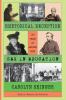
<h3>Studies in Rhetorics and Feminisms</h3><p>Series Editors: Cheryl Glenn and Shirley Wilson Logan</p><p></p><h3>What People Are Saying</h3><p><em>Rhetorical Reception</em> addresses scholars in feminist historiography and theories of rhetoric as well as scholars in the rhetoric of science and medicine. It is also accessible to readers outside of feminist rhetorical studies such as women and gender studies or the history of medicine. As Skinner notes researchers studying the nineteenth century are still arguing about Clarke's text or using Clarke's text as emblematic of nineteenth-century ideologies so <em>Rhetorical Reception</em> will be of interest to scholars in women's history as well.-<strong>Wendy Hayden</strong> author of <em>Evolutionary Rhetoric: Sex Science and Free Love in Nineteenth-Century Feminism</em></p><p></p><h3>Description</h3><p><em>Rhetorical Reception</em> traces commentary on Edward H. Clarke's <em>Sex in Education</em> (1873) across historical contemporary popular professional and silent sites of reception. In doing so <em>Rhetorical Reception</em> explores the rhetorical uses to which variously positioned readers put their commentary on <em>Sex in Education</em> a controversial book that argued that education was a threat to women's health. Rather than merely accepting or rejecting Clarke's claims receivers used his book as an opportunity to make their own arguments in their own contexts. For example in their commentary on <em>Sex in Education</em> nineteenth-century writers negotiated the expectations for scientific discourse addressed to the public argued for and against women's rights asserted professionals' claims to authority and autonomy and advocated a more scientific approach to medicine and education. Over one hundred years later writers were still receiving <em>Sex in Education</em> using references to it in Supreme Court decisions and humorous podcasts. </p><p></p><p><em>Rhetorical Reception</em> also considers silence as a form of reception exploring why some potential commentators including African American women and working-class white women left almost no record of their reception of <em>Sex in Education</em> despite the fact that its call for limits on women's hours at school and work would have affected their education and livelihoods. <em>Rhetorical Reception</em> argues that reception is an important discursive phenomenon one that illuminates how rhetoric contributes to social change not primarily through powerful acts of rhetorical production but through the receptive acts of audiences articulating their acceptance rejection or transformation of arguments and perspectives.</p><p></p><h3>About the Author</h3><p><strong>Carolyn Skinner</strong> is Associate Professor of English at The Ohio State University at Newark. She has taught courses on histories of rhetoric women's rhetoric health and medical rhetoric and technical writing. Her research examines the development of professional and scientific rhetoric in the nineteenth-century United States especially medical rhetoric written by or about women; historical women's rhetorical theory; and rhetorical reception. Skinner's work has appeared in <em>College English</em> <em>Advances in the History of Rhetoric</em> <em>Technical Communication Quarterly</em> <em>Rhetoric Society Quarterly</em> and <em>Rhetoric Review</em>. Her earlier book <em>Women Physicians &amp; Professional Ethos in Nineteenth-Century America</em> (Southern Illinois University Press) examines the rhetorical practices of early women medical professionals.</p><p></p><p></p>

Piracy-free

Assured Quality

Secure Transactions

Fast Delivery

Sustainably Printed
Details
ISBN 13
9781643175294
Publication Date
-18-06-2025
Pages
-254
Weight
-349 grams
Dimensions
-152x229x14.62 mm
