

by
ROMNEY
English


Hardback
₹14394
₹18457
22.01% OFF
(All inclusive*)
Delivery Options
Please enter pincode to check delivery time.
*COD & Shipping Charges may apply on certain items.
Review final details at checkout.
Looking to place a bulk order? SUBMIT DETAILS

Piracy-free

Assured Quality

Secure Transactions
About The Book
Description
Author
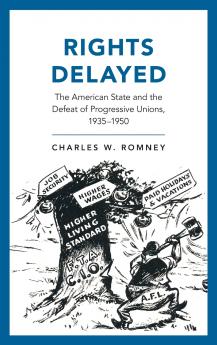
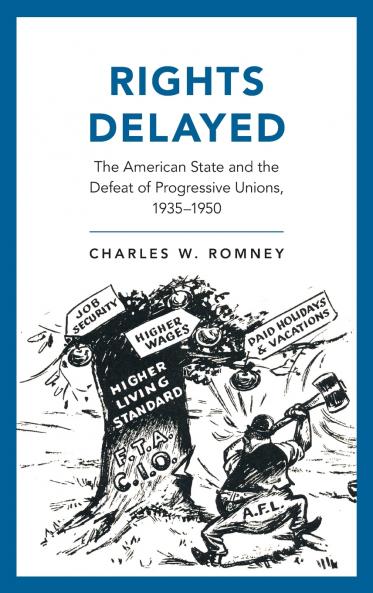
Progressive unions flourished in the 1930s by working alongside federal agencies created during the New Deal. Yet in 1950 few progressive unions remained. Why? Most scholars point to domestic anti-communism and southern conservatives in Congress as the forces that diminished the New Dealstate eliminated progressive unions and destroyed the radical potential of American liberalism. Rights Delayed: The American State and the Defeat of Progressive Unions argues that anti-communism and Congressional conservatism merely intensified the main reason for the decline of progressiveunions: the New Deal state''s focus on legal procedure. Initially progressive unions thrived by embracing the procedural culture of New Deal agencies and the wartime American state. Between 1935 and 1945 unions mastered the complex rules of the NLRB and other federal entities by working withgovernment officials. In 1946 and 1947 however the emphasis on legal procedure made the federal state too slow to combat potentially illegal cooperation between employers and the Teamsters. Workers who supported progressive unions rallied around procedural language to stop what they consideredTeamster collusion but found themselves dependent on an ineffective federal state. The state became even less able to protect employees belonging to left-led unions after the Taft-Hartley Act''s anti-communist provisions-and decisions by union leaders-limited access to the NLRB''s procedures. From1946 until 1950 progressive unions withered and eventually disappeared from the Pacific canneries as the unions failed to pay the cost of legal representation before the NLRB. Workers supporting progressive unions had embraced procedural language to claim their rights but by 1950 those workersdiscovered that their rights had vanished in an endless legal discourse.
Piracy-free
Assured Quality
Secure Transactions
Delivery Options
Please enter pincode to check delivery time.
*COD & Shipping Charges may apply on certain items.
Review final details at checkout.
Details
ISBN 13
9780190250294
Publication Date
-19-04-2009
Pages
-282
Weight
-497 grams
Dimensions
-156x234x17.46 mm
