


This Book is Out of Stock!


₹1607
₹1726
6.89% OFF
(All inclusive*)
Paperback
Delivery Options
*COD & Shipping Charges may apply on certain items.
Review final details at checkout.
Looking to place a bulk order? SUBMIT DETAILS
*COD & Shipping Charges may apply on certain items.
Review final details at checkout.
₹1607
₹1726
6% OFF
Paperback
Out Of Stock
All inclusive*
About The Book
Description
Author(s)
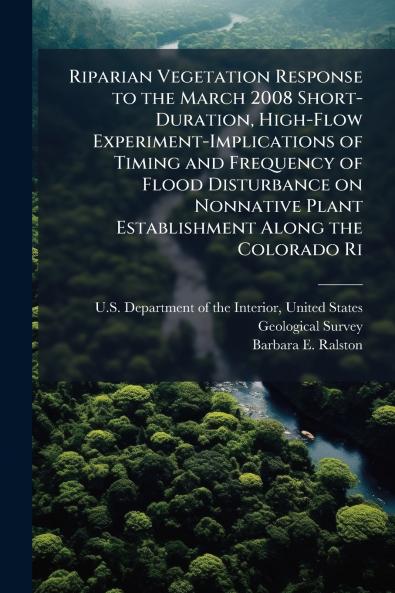
<p>Riparian plant communities exhibit various levels of diversity and richness. These communities are affected by flooding and are vulnerable to colonization by nonnative species. Since 1996 a series of three high-flow experiments (HFE) or water releases designed to mimic natural seasonal flooding have been conducted at Glen Canyon Dam Ariz. primarily to determine the effectiveness of using high flows to conserve sediment a limited resource. These experiments also provide opportunities to examine the susceptibility of riparian plant communities to nonnative species invasions. The third and most recent HFE was conducted from March 5 to 9 2008 and scientists with the U.S. Geological Survey's Grand Canyon Monitoring and Research Center examined the effects of high flows on riparian vegetation as part of the overall experiment. Total plant species richness nonnative species richness percent plant cover percent organic matter and total carbon measured from sediment samples were compared for Grand Canyon riparian vegetation zones immediately following the HFE and 6 months later. These comparisons were used to determine if susceptibility to nonnative species establishment varied among riparian vegetation zones and if the timing of the HFE affected nonnative plant establishment success. The 2008 HFE primarily buried vegetation rather than scouring it. Percent nonnative cover did not differ among riparian vegetation zones; however in the river corridor affected by Glen Canyon Dam operations nonnative species richness showed significant variation. For example species richness was significantly greater immediately after and 6 months following the HFE in the hydrologic zone farthest away from the shoreline the area that represents the oldest riparian zone within the post-dam riparian area. In areas closer to the river channel tamarisk (Tamarix ramosissima X chinensis) seedling establishment occurred (<2 percent cover) in 2008 but not to the extent reported in eit</p><p>This work has been selected by scholars as being culturally important and is part of the knowledge base of civilization as we know it. This work was reproduced from the original artifact and remains as true to the original work as possible. Therefore you will see the original copyright references library stamps (as most of these works have been housed in our most important libraries around the world) and other notations in the work.</p><p>This work is in the public domain in the United States of America and possibly other nations. Within the United States you may freely copy and distribute this work as no entity (individual or corporate) has a copyright on the body of the work.</p><p>As a reproduction of a historical artifact this work may contain missing or blurred pages poor pictures errant marks etc. Scholars believe and we concur that this work is important enough to be preserved reproduced and made generally available to the public. We appreciate your support of the preservation process and thank you for being an important part of keeping this knowledge alive and relevant.</p>

Piracy-free

Assured Quality

Secure Transactions

Fast Delivery

Sustainably Printed
Details
ISBN 13
9781296051990
Publication Date
-16-02-2015
Pages
-40
Weight
-73 grams
Dimensions
-156x234x2.76 mm
