

English


₹11710
(All inclusive*)
Hardback
Delivery Options
Please enter pincode to check delivery time.
*COD & Shipping Charges may apply on certain items.
Review final details at checkout.
Looking to place a bulk order? SUBMIT DETAILS
Delivery Options
Please enter pincode to check delivery time.
*COD & Shipping Charges may apply on certain items.
Review final details at checkout.
About The Book
Description
Author
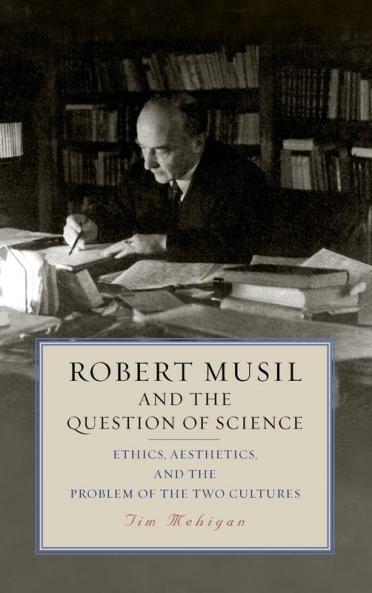
<p>The modern era is marked by the separate life of two cultures of understanding one derived from art and its discourses the other from science and its practices. This &quot;problem of the two cultures&quot; (as coined by C.P. Snow) describes the difficulty of bringing these distinct ways of understanding the world together.<br />The works of the Austrian author Robert Musil (1930-33) represent the most distinguished treatment of this problem in the modern era. Nevertheless doubts persist about Musil&#39;s true intentions. Did he maintain that the separation between art and science could be resolved? Or did he rise above the problem by advocating a new order of being or &quot;other condition&quot; that would dispense with it altogether? Mehigan&#39;s study moves these questions to center stage. He lends new clarity to the debate about Musil&#39;s position in regard to the two cultures by shining a light on ethical questions the author ultimately wished to clarify. It is the shape of a hard-won ethics Mehigan argues that provides the key to an effective response to the problem of the two cultures - an ethics in the end that can only be put forward as a new kind of art.<br /><br />Tim Mehigan is Professor of German and Deputy Director of the Institute for Advanced Studies in the Humanities at the University of Queensland Australia.</p>

Piracy-free

Assured Quality

Secure Transactions

Fast Delivery

Sustainably Printed
Details
ISBN 13
9781640140660
Publication Date
-15-04-2020
Pages
-182
Weight
-343 grams
Dimensions
-152x229x11.11 mm
