




This Book is Out of Stock!
English





Hardback
₹24208
(All inclusive*)
Delivery Options
*COD & Shipping Charges may apply on certain items.
Review final details at checkout.
Looking to place a bulk order? SUBMIT DETAILS

Piracy-free

Assured Quality

Secure Transactions
About The Book
Description
Author
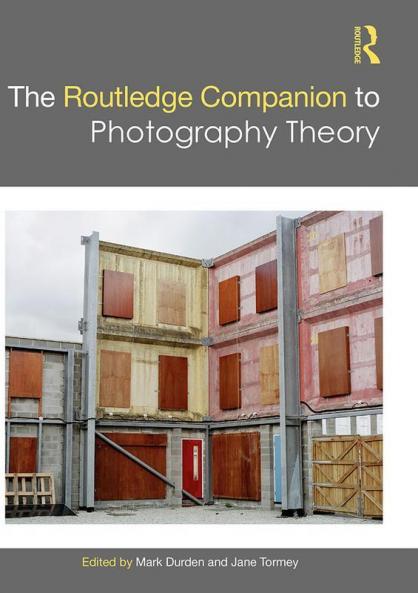
<p>With newly commissioned essays by some of the leading writers on photography today, this companion tackles some of the most pressing questions about photography theory’s direction, relevance, and purpose. </p><p>This book shows how digital technologies and global dissemination have radically advanced the pluralism of photographic meaning and fundamentally transformed photography theory. Having assimilated the histories of semiotic analysis and post-structural theory, critiques of representation continue to move away from the notion of original and copy and towards materiality, process, and the interdisciplinary. The implications of what it means to ‘see’ an image is now understood to encompass, not only the optical, but the conceptual, ethical, and haptic experience of encountering an image. The 'fractal' is now used to theorize the new condition of photography as an algorithmic medium and leads us to reposition our relationship to photographs and lend nuances to what essentially underlies any photography theory — that is, the relationship of the image to the real world and how we conceive what that means. </p><p>Diverse in its scope and themes, <i>The Routledge Companion to Photography Theory</i> is an indispensable collection of essays and interviews for students, researchers, and teachers. The volume also features extensive images, including beautiful colour plates of key photographs. </p> <p><em>List of figures</em></p><p><em>List of plates</em></p><p><em>List of contributors</em></p><p>Introduction</p><p><em>Mark Durden and Jane Tormey</em></p><p><strong>PART I - </strong><strong>AESTHETICS</strong></p><p>1. Feeling in photography, the affective turn, and the history of emotions</p><p>Thy Phu, Elspeth H. Brown, and Andrea Noble </p><p>2. Jacques Rancière: aesthetics and photography</p><p>David Bate</p><p>3. Ambiguity, accident, audience: Minor White’s photographic theory</p><p>Todd Cronan</p><p>4. Testing humanism: the transactions of contemporary documentary photography</p><p>Mark Durden</p><p>5. Jeff Wall speaks with David Campany</p><p>Jeff Wall and David Campany</p><p>6. Deleuze and the simulacrum: simulation and semblance in <em>Public Order</em></p><p><em>Sandra Plummer</em></p><p>7. Five versions of the photographic act: archival logic in the work of Andrea Robbins and Max Becher</p><p>Shep Steiner</p><p>8. Jean Baudrillard’s photography—a vision of his own strange world</p><p><i>Gerry Coulter</i></p><p>9. Visual episodic memory and the neurophenomenology of digital photography</p><p>Jill Bennett</p><p>PART II - POLITICS</p><p>10. Seeing the public image anew: photography exhibitions and civic spectatorship</p><p> <i>Robert Hariman and John Louis Lucaites</i></p><p>11. Still images on the move: theoretical challenges and future possibilities</p><p>Marta Zarzycka</p><p>12. Interview with Ariella Azoulay</p><p><em>Ariella Azoulay and Justin Carville</em> </p><p>13. Human rights practice and visual violations</p><p>Ruthie Ginsburg</p><p>14. Love the bomb: picturing nuclear explosion</p><p>Paula Rabinowitz</p><p>15. Twice captured: the work of atrocity photography</p><p>Molly Rogers</p><p>16. Presenting the unrepresentable: confrontation and circumvention</p><p><i>Jane Tormey </i></p><p>17. The eco-anarchist potential of environmental photography: Richard Misrach and Kate Orff’s <em>Petrochemical America</em></p><p><em>Conohar Scott</em></p><p>18. Counter-forensics and photography</p><p>Thomas Keenan</p><p>PART III - THEORIES</p><p>19. Derrida and photography theory</p><p>Malcolm Barnard</p><p>20. Image, affect, and autobiography: Roland Barthes’ photographic theory in light of his posthumous publications</p><p>Kathrin Yacavone</p><p>21. Ideation and photography: a critique of François Laruelle’s concept of abstraction</p><p><i>John Roberts</i></p><p>22. Fractal photography and the politics of invisibility</p><p><i>Daniel Rubinstein</i></p><p>23. Photographic apparatus in the era of tagshot culture</p><p>Mika Elo</p><p>24. Artistic representation and politics: an exchange between Victor Burgin and Hilde Van Gelder</p><p><em>Victor Burgin and Hilde Van Gelder</em></p><p>25. Decentering the photographer: authorship and digital photography</p><p>Daniel Palmer</p><p>26. Out of language: photographing as translating</p><p>Nancy Ann Roth</p><p>27. Habitual photography: time, rhythm, and temporalization in contemporary personal photography</p><p><i>Martin Hand and Ashley Scarlett</i></p><p><i>Index</i></p>
Piracy-free
Assured Quality
Secure Transactions
*COD & Shipping Charges may apply on certain items.
Review final details at checkout.
₹24208
Out Of Stock
All inclusive*
Details
ISBN 13
9781138845770
Publication Date
-14-07-2022
Pages
-474
Weight
-891 grams
Dimensions
-174x246x26.35 mm
