



This Book is Out of Stock!



Hardback
₹21997
₹22071
0.33% OFF
(All inclusive*)
Delivery Options
*COD & Shipping Charges may apply on certain items.
Review final details at checkout.
Looking to place a bulk order? SUBMIT DETAILS
*COD & Shipping Charges may apply on certain items.
Review final details at checkout.
₹21997
₹22071
0% OFF
Hardback
Out Of Stock
All inclusive*
About The Book
Description
Author(s)
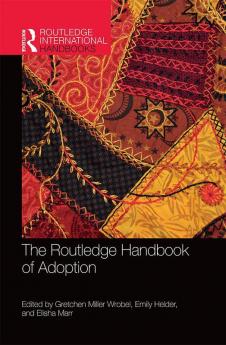
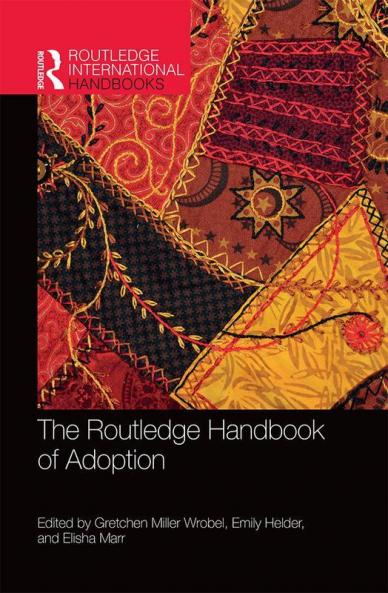
<p>Adoption is practiced globally yielding a multidimensional area of study that cannot be characterized by a single movement or discipline. This handbook provides a central source of contemporary scholarship from a variety of disciplines with an international perspective and uses a multifaceted and interdisciplinary approach to ground adoption practices and activities in scientific research. Perspectives of birth/first parents, adoptive parents, and adopted persons are brought forth through a range of disciplinary and theoretical lenses.</p><p>Beginning with background and context of adoption, including sociocultural and political contexts, the handbook then addresses the diversity of adoptive families in terms of family forms, attitudes about adoption, and characteristics of adopted children. Next, research examining the lived experience of adoption for birth parents, adoptive parents, and adopted individuals is presented. A variety of outcomes for internationally and domestically adopted children and adoptive families is then discussed and the handbook concludes by addressing the development, training, and implementation of adoption competent clinical practice.</p><p>With cutting-edge research from top international scholars in a diversity of fields, <i>The Routledge Handbook of Adoption </i>should be considered essential reading for students, researchers, and practitioners across the fields of social work, sociology, psychology, medicine, family science, education, and demography. </p><p>Interviews with chapter authors can be accessed as podcasts (https://anchor.fm/emily-helder) or as videos (https://bit.ly/2FIoi0a). </p> <p><strong>Part I: Adoption in context</strong></p><p>1. Historical and contemporary contexts of US adoption: an overview</p><p>2. US adoption by the numbers</p><p>3. An economic perspective on ethics in adoption policy</p><p>4. Domestic adoption in Ethiopia</p><p>5. Intersection of information science and crisis pregnancy decision-making</p><p>6. Respecting children’s relationships and identities in adoption</p><p>7. The Early Growth and Development Study: using an adoption design to understand family influences and child development</p><p>Part II: Diversity in adoption</p><p>8. Unique challenges and strengths for families formed through international adoption</p><p>9. A critical adoption studies and Asian Americanist integrative perspective on the psychology of Korean adoption </p><p>10. A nationally representative comparison of Black and White adoptive parents of Black adoptees</p><p>11. Racial and gender preferences among potential adoptive parents</p><p>12. Adoptive families headed by LGBTQ parents. </p><p>13. Post-institutionalized adopted children: effects of prolonged institutionalization and adoption at an older age</p><p>14. Adoptees with disabilities or medically involved children: a multidisciplinary approach for preparing parents, assessing the child, and supporting successful family formation</p><p>15. Adoption in the context of natural disaster</p><p>Part III: Lived experience</p><p>16. Birth mothers’ options counseling and relinquishment experiences</p><p>17. Transracial adoptees: the rewards and challenges of searching for their birth families</p><p>18. Communication about adoption in families</p><p>19. Open adoption</p><p>20. How adoptive parents think about their role as parents</p><p>21. Religiosity and adoption</p><p>22. Adoptive microaggressions: historical foundations, current research, and practical implications</p><p>23. Maltreatment of adoptees in adoptive homes<i> </i></p><p>Part IV: Outcomes</p><p>24. Speech and language development in adopted children</p><p>25. Behavioral and emotional adjustment in adoptees</p><p>26. The neurobiological embedding of early social deprivation in children exposed to institutional rearing</p><p>27. Post-adoption short- and long-term social adaptation and competence of internationally adopted children</p><p>28. Academic performance and school adjustment of internationally adopted children in Norway. </p><p>29. Parenting stress in adoptive families</p><p>30. Adoption instability, adoption breakdown</p><p>Part V: Adoption Competency</p><p>31. Adoption competent clinical practice</p><p>32. Training for Adoption Competency curriculum</p><p>33. Awareness of adoption at school</p><p>34. Post-adoption services: needs and adoption type. </p><p>35. Adoption-specific curricula in higher education</p>

Piracy-free

Assured Quality

Secure Transactions

Fast Delivery

Sustainably Printed
Details
ISBN 13
9781138362505
Publication Date
-03-03-2020
Pages
-546
Weight
-1007 grams
Dimensions
-174x246x30.05 mm
Imprint
-TAYLOR AND FRANCIS GROUP LIMITED
