




This Book is Out of Stock!




₹23155
(All inclusive*)
Hardback
Delivery Options
*COD & Shipping Charges may apply on certain items.
Review final details at checkout.
Looking to place a bulk order? SUBMIT DETAILS
*COD & Shipping Charges may apply on certain items.
Review final details at checkout.
₹23155
Out Of Stock
All inclusive*
About The Book
Description
Author(s)
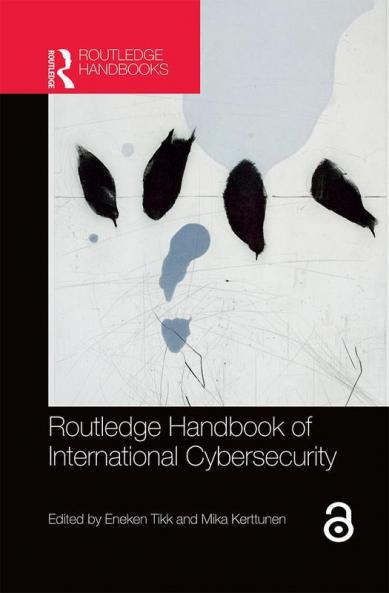
<p>The <i>Routledge Handbook of International Cybersecurity</i> examines the development and use of information and communication technologies (ICTs) from the perspective of international peace and security.</p><p>Acknowledging that the very notion of peace and security has become more complex, the volume seeks to determine which questions of cybersecurity are indeed of relevance for international peace and security and which, while requiring international attention, are simply issues of contemporary governance or development. The Handbook offers a variety of thematic, regional and disciplinary perspectives on the question of international cybersecurity, and the chapters contextualize cybersecurity in the broader contestation over the world order, international law, conflict, human rights, governance and development.</p><p>The volume is split into four thematic sections:</p><ul> <li>Concepts and frameworks;</li> </ul><ul> <li>Challenges to secure and peaceful cyberspace;</li> </ul><ul> <li>National and regional perspectives on cybersecurity;</li> </ul><ul> <li>Global approaches to cybersecurity.</li> </ul><p>This book will be of much interest to students of cybersecurity, computer science, sociology, international law, defence studies and International Relations in general.</p><p>Chapter 30 of this book is freely available as a downloadable Open Access PDF at http://www.taylorfrancis.com under a Creative Commons Attribution-Non Commercial-No Derivatives (CC-BY-NC-ND) 4.0 license. </p> <p>Foreword <i>Joseph S. Nye, Jr. </i>Introduction <i>Eneken Tikk and Mika Kerttunen </i><b>Part I: Concepts and frameworks </b>1. Cybersecurity between hypersecuritization and technological routine <i>Myriam Dunn-Cavelty </i>2. Correlates of state-sponsored cyber conflict <i>George E. Mitchell and Allison Pytlak </i>3. Cybered conflict, hybrid war, informatization wars <i>Chris Demchak </i>4. The Politics of Stability: Cement and Change in Cyber Affairs <i>Mika Kerttunen and Eneken Tikk </i>5. In search of human rights in multilateral cybersecurity dialogues <i>Allison Pytlak </i>6. International governance of/in cyberspace <i>Tang Lan (translated by Nigel Inkster) </i>7. The becoming of cyber-military capabilities <i>Mirva Salminen and Mika Kerttunen </i><b>Part II: Challenges to secure and peaceful cyberspace </b>8. Cyber vulnerability <i>Brian Martin </i>9. Ensuring the security and availability of critical infrastructure in a changing cyber-threat environment: Living dangerously <i>Vytautas Butrimas </i>10. Steps to an ecology of cyberspace as a contested domain <i>Martin Libicki </i>11. Cybercrime: setting international standards <i>Tatiana Tropina </i>12. Cyberterrorism: a Schrödinger’s cat <i>Mika Kerttunen </i>13. Information operations <i>Jouni Flyktman, Aki-Mauri Huhtinen and Lars Koreman </i>14. National cyber commands <i>Piret Pernik </i><b>Part III: National and regional perspectives on cybersecurity </b>15. Cyber capacity building and international security <i>Souhila Amazouz </i>16. Challenges in building regional capacities in cybersecurity-A regional organizational reflection <i>Belisario Contreras and Kerry-Ann Barrett </i>17. Singapore, ASEAN and international cybersecurity <i>Benjamin Ang </i>18. Sub-regional views on International Cybersecurity: CLMV <i>Lim Ratha and Sok Kunvath </i>19. Regional cybersecurity approaches in Africa and Latin America <i>Lucy Purdon and Francisco Vera </i>20. A regional view on international cybersecurity: The scope, problem and remedies as seen in West Africa <i>Folake Olagunju Oyelola </i>21. Risk, resilience and retaliation: American perspectives on international cybersecurity <i>James A. Lewis </i>22. International information security: problems and ways of solving them <i>Andrej Krutskikh &amp; Anatoli Streltsov </i>23. People’s Republic of China: seven cybersecurity considerations <i>Zhang Li </i><b>Part IV: Global approaches to cybersecurity </b>24. Cyber Diplomacy: an Australian perspective <i>Tobias Feakin and Johanna Weaver </i>25. Confidence-building measures in cyberspace: new applications for an old concept <i>Paul Meyer </i>26. Export controls: The Wassenaar Experience and its lessons for international regulation of cyber tools <i>Elaine Korzak </i>27. Global cybersecurity and the private sector <i>Anne-Marie Buzatu </i>28. Putting the technical community back into cyber (policy) <i>Pablo Hinojosa, Klée Aiken and Louise Marie Hurel </i>29. Economic cybersecurity law: a short primer <i>Kathleen Claussen </i>30. The role of the UN Security Council in cybersecurity: International peace and security in the digital age <i>Eneken Tikk and Niels Nagelhus Schia </i>31. International law and cyber conflict <i>Gary D. Brown </i>32. Exploring the General Principles of International Law in Cybersecurity Context <i>Nohyoung Park and Myung-Hyun Chung </i>Conclusion: What are we talking about when we are talking about cybersecurity <i>Eneken Tikk</i></p>

Piracy-free

Assured Quality

Secure Transactions

Fast Delivery

Sustainably Printed
Details
ISBN 13
9781138489011
Publication Date
-07-02-2020
Pages
-422
Weight
-807 grams
Dimensions
-174x246x23.68 mm
Imprint
-TAYLOR AND FRANCIS GROUP LIMITED
