




This Book is Out of Stock!




Hardback
₹23155
(All inclusive*)
Delivery Options
*COD & Shipping Charges may apply on certain items.
Review final details at checkout.
Looking to place a bulk order? SUBMIT DETAILS

Piracy-free

Assured Quality

Secure Transactions
About The Book
Description
Author
Shoutouts
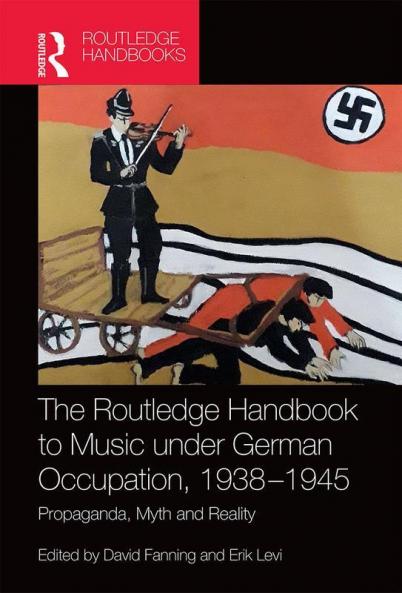
<p>Following their entry into Austria and the Sudetenland in the late 1930s, the Germans attempted to impose a policy of cultural imperialism on the countries they went on to occupy during World War II. Almost all music institutions in the occupied lands came under direct German control or were subject to severe scrutiny and censorship, the prime objective being to change the musical fabric of these nations and force them to submit to the strictures of Nazi ideology. </p><p>This pioneering collection of essays is the first in the English language to look in more detail at the musical consequences of German occupation during a dark period in European history. It embraces a wide range of issues, presenting case studies involving musical activity in a number of occupied European cities, as well as in countries that were part of the Axis or had established close diplomatic relations with Germany. The wartime careers and creative outputs of individual musicians who were faced with the dilemma of either complying with or resisting the impositions of the occupiers are explored. In addition, there is some reflection on the post-war implications of German occupation for the musical environment in Europe. </p><p><em>Music under German Occupation</em> is written for all music-lovers, students, professionals and academics who have particular interests in 20th-century music and/or the vicissitudes of European cultural life during World War II.</p> <p>Introduction: the foundations of Nazi musical imperialism </p><p>David Fanning and Erik Levi</p><p>Section 1 Musical life, resistance and destruction in occupied European capitals </p><p>1 Composers as critics in occupied Paris </p><p>Nigel Simeone</p><p>2 The Conservatoire in occupied Kiev (19 September 1941 to 6 November 1943)</p><p>Elena Zinkevych, Translated by Michelle Assay</p><p>3 Nazi musical imperialism in occupied Poland </p><p>Katarzyna Naliwajek</p><p>4 Music and musical life in occupied Athens </p><p><em>Alexandros Charkiolakis</em></p><p>Section 2 Adaptation and opportunism </p><p>5 The Rome-Berlin Axis: musical interactions between Fascist Italy and Nazi Germany in redrawing a ‘New Order for European Culture’</p><p>Erik Levi</p><p>6 In search of a musical identity in the Nazi-occupied Netherlands </p><p>Dario van Gammeren</p><p>7 Symphonic music in occupied Belgium (1940–1944): the role of ‘German-friendly’ music societies </p><p>Eric Derom</p><p>8 Music, culture and the Church in the German-occupied USSR: the Smolensk area and other provinces </p><p>Svetlana Zvereva</p><p>Section 3 Appropriations and reputations </p><p>9 Celebrating a Mozart anniversary in occupied Belgium: the <i>Mozart Herdenking in Vlaanderen </i>(1942)</p><p>Marie-Helene Benoit-Otis and Cecile Quesney</p><p>10 The ambiguous reception of Antonin Dvořak’s music during the <i>Reichsprotektorat Bohmen und Mahren </i>(The Protectorate of Bohemia and Moravia), 1939–1945 </p><p>Kateřina Nova, Translated by Štěpan Kaňa</p><p>11 Celebrating the Nordic tone – fighting for national legacy: the Grieg Centenary, 1943 </p><p>Michael Custodis &amp; Arnulf Mattes</p><p>Section 4 Between two evils </p><p>12 The song collector, the year of terrors and the catastrophe that followed: a life in occupied Latvia </p><p><em>Kevin C. Karnes</em></p><p>13 The music of Čiurlionis in the context of resistance and Lithuanian national identity during the Nazi occupation (1941–1944) </p><p>Vytautė Markeliūnienė</p><p>14 Power through music: strategies of the German occupation authorities in Estonia </p><p>Kristel Pappel and Anu Kolar</p><p>Section 5 The limits of tolerance </p><p>15 Getting away with Cultural Bolshevism: the first European performance of <i>Porgy and Bess </i>in Copenhagen, 1943 </p><p>Michael Fjeldsoe</p><p>16 Music criticism in the Swedish Nazi daily press: the case of <i>Dagsposten </i></p><p>Henrik Rosengren</p><p>Section 6 Damaged careers </p><p>17 (Re)visiting the (Jewish) archive of Gideon Klein – Terezin, 1941–1944 </p><p>David Fligg</p><p>18 Eugeniusz Morawski: life under the Nazi occupation of Warsaw </p><p>Oskar Łapeta</p><p>Section 7 Symphonies of war and resistance </p><p>19 Religious patriotism and grotesque ridicule: responses to Nazi oppression in Pavel Haas’s unfinished war-time Symphony </p><p>Martin Čurda</p><p>20 Paul von Klenau’s Ninth Symphony: a case study </p><p><em>Niels Krabbe</em></p><p>21 Shostakovich’s ‘Leningrad’ Symphony: music of endurance </p><p>David Fanning and Michelle Assay</p><p>Section 8 Complex and uneasy legacies </p><p>22 Listening in the Grey Zone </p><p>Michael Beckerman</p><p>23 The marketing of backstories: approaches to the legacies of music composed in fraught circumstances </p><p>Mirjam Frank</p><p>24 Nazism, music and Tyrolean identity </p><p>Kurt Drexel</p><p>25 Bartok against the Nazis: the Italian premieres of <i>Bluebeard’s Castle </i>(1938) and <i>The Miraculous Mandarin </i>(1942) </p><p>Nicolo Palazzetti</p><p>26 Contemporary music and cultural politics in Switzerland during World War II: between neutrality and nationalism</p><p>Simeon Thompson</p>
Piracy-free
Assured Quality
Secure Transactions
*COD & Shipping Charges may apply on certain items.
Review final details at checkout.
₹23155
Out Of Stock
All inclusive*
Details
ISBN 13
9781138713888
Publication Date
-14-07-2022
Pages
-572
Weight
-894 grams
Dimensions
-156x234x31.39 mm
