

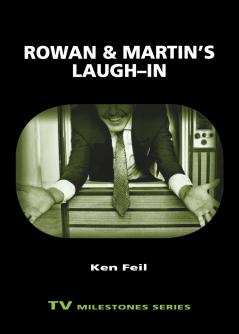
by
Ken Feil
English
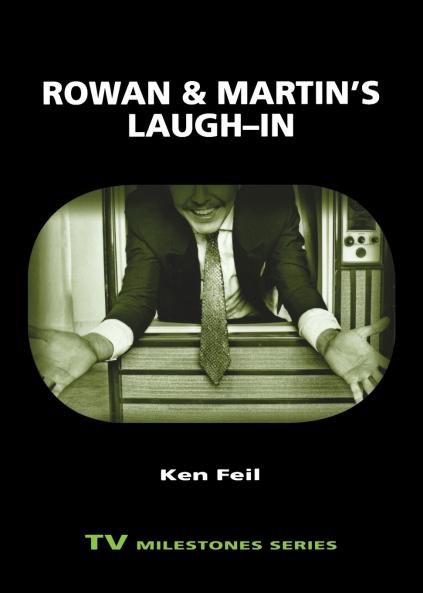


Paperback
₹2427
₹3139
22.68% OFF
(All inclusive*)
Delivery Options
Please enter pincode to check delivery time.
*COD & Shipping Charges may apply on certain items.
Review final details at checkout.
Looking to place a bulk order? SUBMIT DETAILS
Delivery Options
Please enter pincode to check delivery time.
*COD & Shipping Charges may apply on certain items.
Review final details at checkout.
About The Book
Description
Author
<p>The highest-rated network program during its first three seasons comedy-variety show <em>Rowan and Martin&rsquo;s Laugh-In </em>(NBC 1968&ndash;1973) remains an often overlooked and underrated innovator of American television history. Audiences of all kinds&mdash;old and young square and hip black and white straight and queer&mdash;watched <em>Laugh-In</em> whose campy anti-establishment aesthetic mocked other tepid and serious popular shows. In <em>Rowan and Martin&rsquo;s Laugh-In </em>author<em> </em>Ken Feil presents the first scholarly investigation of the series whose suggestive catch-phrases &ldquo;sock it to me&rdquo; &ldquo;look that up in your Funk&rsquo;n&rsquo;Wagnalls&rdquo; and &ldquo;here comes the judge&rdquo; became part of pop culture history.<br />&nbsp;&nbsp;<br />&nbsp;In four chapters Feil explores <em>Laugh-In</em>&rsquo;s newness sophisticated style irreverence and broad appeal. First he considers the show&rsquo;s indulgence of &ldquo;bad taste&rdquo; through a strategy of deliberate ambiguity that allowed audiences to enjoy countercultural anti-establishment transgression and reassuringly conveyed the sense that it represented the establishment&rsquo;s investment in containing such defiant delights. Feil considers <em>Laugh-In</em>&rsquo;s camp otherness and &ldquo;open secrets&rdquo; as well as the show&rsquo;s conflicted positions on the &ldquo;private&rdquo; issues of taste sexuality lifestyle and politics. Sexual swingers stoned hippies empowered African Americans feminists and flamboyantly &ldquo;nellie&rdquo; men all filled <em>Laugh-In</em>&rsquo;s routine roster embodied by cast members Goldie Hawn Jo Anne Worley Lily Tomlin Chelsea Brown Alan Sues Johnny Brown and Judy Carne along with regular guests Flip Wilson Sammy Davis Jr. and Tiny Tim. Related to these icons <em>Laugh-In</em> reflected on hotly politicized current events: militarism in Vietnam racist discrimination in the U.S. Civil Rights and Black Power birth control and sex feminism and gay liberation.<br />&nbsp;&nbsp;<br />&nbsp;In its playful put-ons of the establishment parade of countercultural types and tastes and vacillation between identification and repulsion Feil argues that <em>Laugh-In</em>&rsquo;s intentional ambiguity was part and parcel of its inventiveness and commercial prosperity. Fans of the show as well as readers interested in American television and pop culture history will enjoy this insightful look at <em>Rowan and Martin&rsquo;s Laugh-In</em>.</p>

Piracy-free

Assured Quality

Secure Transactions

Fast Delivery

Sustainably Printed
Details
ISBN 13
9780814338223
Publication Date
-03-11-2014
Pages
-168
Weight
-154 grams
Dimensions
-127x178x9.12 mm
