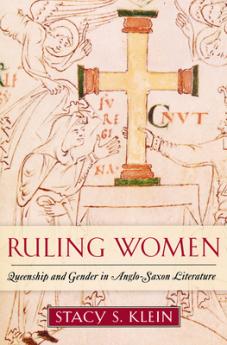
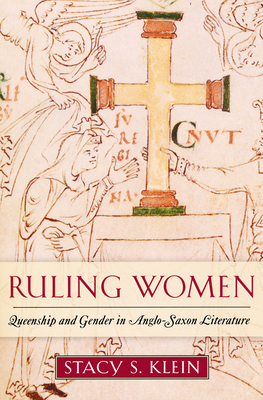
Ruling Women

About The Book

<p>In <i>Ruling Women</i> Stacy S. Klein explores how queens functioned as imaginative figures in Anglo-Saxon texts. Focusing on pre-Conquest works ranging from Bede to Ælfric Klein argues that Anglo-Saxon writers drew upon accounts of legendary royal wives to construct cultural ideals of queenship during a time when that institution was undergoing profound change. Also a study of gender her book examines how Anglo-Saxon writers used women of the highest social rank to forge broader cultural ideals of femininity even as they used female voices to articulate far less comfortable social truths. Capitalizing on queens' strong associations with intercession Anglo-Saxon writers consistently looked to royal women as mediatory figures for negotiating sustained tensions and sometimes overt antagonisms among different peoples institutions and systems of belief. Yet as authors appropriated legendary queens and inserted them into contemporary Anglo-Saxon culture these royal peaceweavers simultaneously threatened to destroy existing unities and to expose the fragility of seemingly entrenched social formations. Drawing on the strengths of historical typological and literary criticism feminist theory and cultural studies <i>Ruling Women</i> offers us a way to understand Anglo-Saxon texts as both literary monuments and historical documents and thus to illuminate the ideological fissures and cultural stakes of Anglo-Saxon literary practice.</p> <p>Legendary royal wives glitter here and there in the Anglo-Saxon corpus from Bede's <i>History</i> to <i>Beowulf</i> and from Cynewulf's <i>Elene</i> to Aelfric's tales of Jezebel and Esther. Stacy Klein's book shows how writers mobilized these queens to address indirectly contemporary issues such as the downside of heroism or the upside of lay spirituality. This is a rich learned eloquent and often surprising study. -Roberta Frank Douglas Tracy Smith Professor of English Yale University</p> <p><i>Ruling Women</i> makes important contributions to current academic debates in many areas among them historiography queenship sanctity gender and identity Ælfric and his age Bede's <i>Historia Ecclesiastica</i> and the Anglo-Saxon sense of the past. By bringing these varied discourses together in one book carefully reconstructing the cultural theoretical literary and historical contexts in which Anglo-Saxon texts were made and read Klein achieves a complex depth of vision that is enlightening imaginative innovative and exemplary. -R. M. Liuzza University of Tennessee Knoxville</p>
Piracy-free
Piracy-free
Assured Quality
Assured Quality
Secure Transactions
Secure Transactions
Delivery Options
Please enter pincode to check delivery time.
*COD & Shipping Charges may apply on certain items.
Review final details at checkout.
downArrow

Details


LOOKING TO PLACE A BULK ORDER?CLICK HERE