

English


Paperback
₹4787
₹6139
22.02% OFF
(All inclusive*)
Delivery Options
Please enter pincode to check delivery time.
*COD & Shipping Charges may apply on certain items.
Review final details at checkout.
Looking to place a bulk order? SUBMIT DETAILS
Delivery Options
Please enter pincode to check delivery time.
*COD & Shipping Charges may apply on certain items.
Review final details at checkout.
About The Book
Description
Author
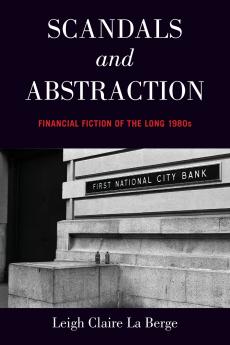
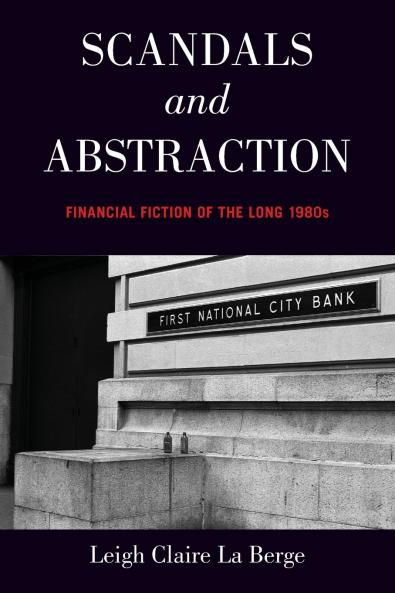
<p>The Long 1980s could be summed up handily in the annals of U.S. cultural history with the enduring markers of Ronald Reagan&#39;s presidency Oliver Stone&#39;s film<em> Wall Street</em> and Dire Straits&#39;s hit single &quot;Money for Nothing.&quot; Despite their vast differences each serves to underscore the confidence jingoism and optimism that powered the U.S. economy throughout the decade. Mining a wide range of literature film and financial print journalism <em>Scandals and Abstraction</em> chronicles how American society&#39;s increasing concern with finance found expression in a large array of cultural materials that ultimately became synonymous with postmodernism.</p><p>The ever-present credit cards monetary transactions and ATMs in Don De Lillo&#39;s <em>White Noise </em>open this study as they serve as touchstones for its protagonist&#39;s sense of white masculinity and ground the novel&#39;s narrative form. Tom Wolfe&#39;s <em>The Bonfire of the Vanities</em> and Oliver Stone&#39;s <em>Wall Street</em> animate a subsequent chapter as each is considered in light of the 1987 stock market crash and held up as a harbinger of a radical new realism that claimed a narrative monopoly on representing an emergent financial era. These works give way to the pornographic excess and violence of Bret Easton Ellis&#39;s epochal <em>American Psycho</em> which is read alongside the popular 1980s genre of the financial autobiography. With a series of trenchant readings La Berge argues that Ellis&#39;s novel can be best understood when examined alongside Ivan Boesky&#39;s <em>Merger Mania</em> Donald Trump&#39;s<em> The Art of the Deal</em> and T. Boone Pickens&#39;s <em>Boone</em>. A look at Jane Smiley&#39;s <em>Good Faith</em> and its plot surrounding the savings and loan crisis of the 1980s and 1990s concludes the study and considers how financial reportage became a template for much of our current writing about of finance.</p><p>Drawing on a diverse archive of novels films autobiographies and journalism <em>Scandals and Abstraction</em> provides a timely study of the economy&#39;s influence on fiction and outlines a feedback loop whereby postmodernism became more canonical realism became more postmodern and finance became a distinct cultural object.</p>

Piracy-free

Assured Quality

Secure Transactions
Details
ISBN 13
9780190845988
Publication Date
-01-05-2020
Pages
-242
Weight
-350 grams
Dimensions
-156x234x13.96 mm
