


English



₹14035
₹17490
19.75% OFF
(All inclusive*)
Hardback
Delivery Options
Please enter pincode to check delivery time.
*COD & Shipping Charges may apply on certain items.
Review final details at checkout.
Looking to place a bulk order? SUBMIT DETAILS
Delivery Options
Please enter pincode to check delivery time.
*COD & Shipping Charges may apply on certain items.
Review final details at checkout.
About The Book
Description
Author(s)
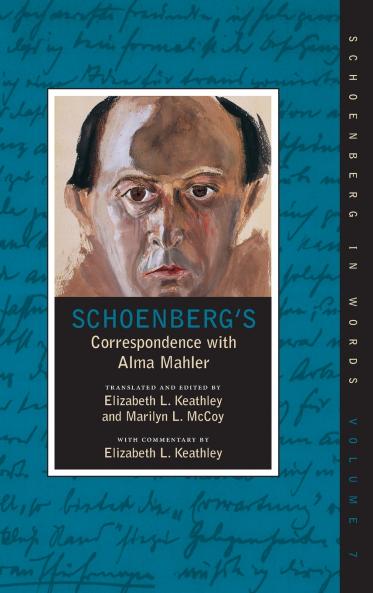
A fresh perspective on two well-known personalities <em>Schoenberg's Correspondence with Alma Mahler</em> documents a modern music friendship beginning in<em> fin-de-si&#65533;cle</em> Vienna and ending in 1950s Los Angeles. This volume is the first English-language edition of the complete extant correspondence in new English translations from the original German many from new transcriptions of handwritten originals and it is the first English-language book of Schoenberg's correspondence with a female associate. These often quite candid letters afford readers a fascinating glimpse into the personalities ideologies institutions protocols and aesthetics of early twentieth-century European music culture. Critics conductors composers and visual artists are appraised kindly or venomously; visual artists and writers also appear. <p/>Above all Alma Mahler (1879-1964) and Arnold Schoenberg (1874-1951) emerge as intriguing complex individuals who transcend their conventional representations as respectively a <em>femme fatale</em> and a musical radical. For Schoenberg Alma was a sympathetic confidante a comrade in their shared battle against musical conservatism yet also a canny negotiator of Vienna's social circles a skill that brought Schoenberg into contact with important patrons. Not only did he invite Alma to his premieres lectures and art exhibitions but Schoenberg also sent her scores of his music and drafts of his writings. He revealed to her his plans for his innovative new music society the Society for Private Music Performances and his development of a new method of composition with twelve tones. <p/>The letters remind us of how crucial the social and personal dimensions of music culture were to the early twentieth-century composers and musicians. Gender ethnicity and social class conditioned their opportunities in music---and in life---and their shared experience of fleeing fascism to a new country with a different culture and language resonates with our own epoch.<br>

Piracy-free

Assured Quality

Secure Transactions

Fast Delivery

Sustainably Printed
Details
ISBN 13
9780195381962
Publication Date
-14-06-2019
Pages
-450
Weight
-727 grams
Dimensions
-156x234x25.4 mm
