


This Book is Out of Stock!
English


Paperback
₹2400
(All inclusive*)
Delivery Options
*COD & Shipping Charges may apply on certain items.
Review final details at checkout.
Looking to place a bulk order? SUBMIT DETAILS
*COD & Shipping Charges may apply on certain items.
Review final details at checkout.
₹2400
Out Of Stock
All inclusive*
About The Book
Description
Author
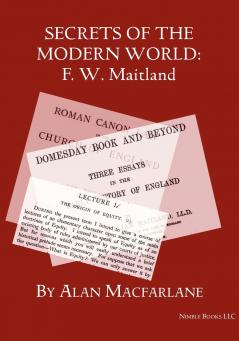
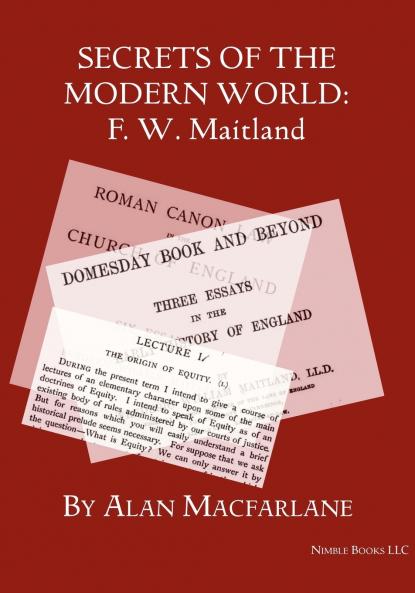
Alan Macfarlane writes of F. W. Maitland:<p>When we consider that some five thousand pages of detailed findings writtenabout a hundred years ago have been modified in only a few minor emphasesand one or two facts and that the bulk of Maitland's edifice still stands we canbegin to understand why he has an almost god-like status among historians whoknow the problems he faced and the elegance of his solutions.<p>The great legal historian Vinogradoff disagreed with Maitland on some specificpoints but shortly after Maitland's death wrote of him as 'the greatest legalhistorian of the law of England' and as a man to whom lawyers historians andsociologists were equally indebted: 'lawyers because of his subject historiansbecause of his methods sociologists because of his results.'<p>J.H.Hexter referred to Maitland as 'the greatest of English historians' in hisbook on modern historians. R.G.Collingwood referred to the 'best historianslike Mommsen and Maitland'. Denys Hay in his overview of westernhistoriography describes him as a 'giant' who with Marc Bloch is one of the 'twogreatest historians of recent times'. Bloch himself referred to 'the great Englishjurist Maitland.' The medievalist Helen Cam ends her preface to his SelectedEssays by concluding fifty years after his death. 'Let us say with PowickeMaitland is one of the immortals and leave it at that.' G.O.Sayles wrote that'In the range of his interests the fineness of his intellect and the considerablebulk of what he wrote in barely twenty-five years Maitland has no match amongEnglish historians.' <p>Driven on by the sense of an impending early death Maitland tried to solvewithin a period of some twenty years the same riddle as earlier thinkers. Howhad the strange modern world with its glimpses of liberty equality and wealthbeen made? Why had it found its expression in a certain part of the world and inits earliest and definitive form in England? What precisely were the constituents of this peculiar civilization? His solutions much more deeply based ondocuments were in substance the same as those put forward by MontesquieuAdam Smith and Tocqueville. The essence of modernity lay in the separation ofspheres the tensions between religion politics kinship and economy. Out ofthese contradictions emerged certain liberties and a dynamic energy.<p> A whole set of factors from the general (the nature of islandhood theaccident of the Norman Conquest the absence of Cathar heresies and theinquisition) to the individual (the personality of Henry II or Edward I) playedtheir part. What happened on one small island both reflected what happened onits neighbouring continent but also transformed it. Like some new species offinch on the Galapagos there developed a new kind of civilization. This wouldthen be magnified and taken to its extreme through other accidents thedevelopment of America the expansion of the British Empire and the firstindustrial revolution and so to the modern world. With Maitland we have adeveloped theory which puts forward a believable answer to one part of thequestion of how the modern world has been made.<p>

Piracy-free

Assured Quality

Secure Transactions

Fast Delivery

Sustainably Printed
Details
ISBN 13
9781934840948
Publication Date
-01-09-2009
Pages
-106
Weight
-203 grams
Dimensions
-178x254x6.99 mm
