

English



₹5357
(All inclusive*)
Paperback
Delivery Options
Please enter pincode to check delivery time.
*COD & Shipping Charges may apply on certain items.
Review final details at checkout.
Looking to place a bulk order? SUBMIT DETAILS
Delivery Options
Please enter pincode to check delivery time.
*COD & Shipping Charges may apply on certain items.
Review final details at checkout.
About The Book
Description
Author
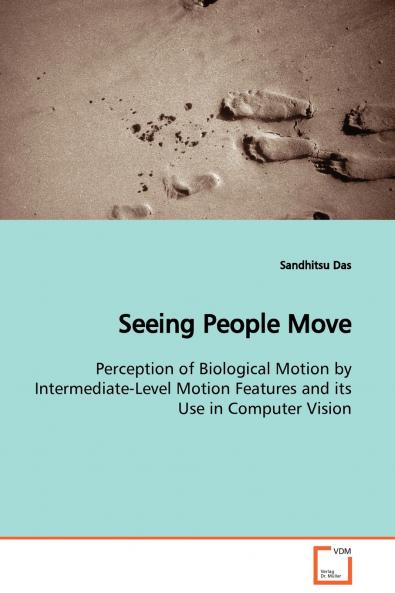
The human brain is adept at recognizing humans and animals in motion. The visual system effortlessly carries out many different tasks based on what we see. However motion detection particularly that of other animals and conspecifics is one of the most important visual tasks the brain had to be good at from the perspective of evolution. Getting away from predators hunting preys and effective social interaction - all of these play crucial roles for survival of a species. The brain has therefore evolved to be extremely good at detecting these types of motions. However little is known about the computational steps or the neural mechanisms that make this possible. In particular it is unclear whether the mechanism is any different from other general purpose recognition tasks or if there are specialized computational abstractions in use. In this book analysis of human motion data and psychophysical experiments are used in an attempt to say something about what the brain might be doing while it executes the biological motion recognition task. It is further shown that knowledge gained through these experiments can also be used as a gait recognition tool in computer vision.

Piracy-free

Assured Quality

Secure Transactions

Fast Delivery

Sustainably Printed
Details
ISBN 13
9783639098914
Publication Date
-06-01-2009
Pages
-120
Weight
-174 grams
Dimensions
-150x220x6.77 mm
