

English



₹1833
₹1856
1.24% OFF
(All inclusive*)
Paperback
Delivery Options
Please enter pincode to check delivery time.
*COD & Shipping Charges may apply on certain items.
Review final details at checkout.
Looking to place a bulk order? SUBMIT DETAILS
Delivery Options
Please enter pincode to check delivery time.
*COD & Shipping Charges may apply on certain items.
Review final details at checkout.
About The Book
Description
Author(s)
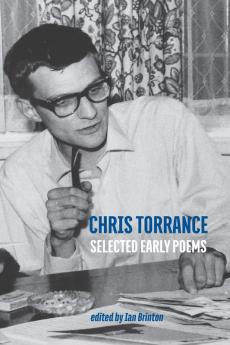
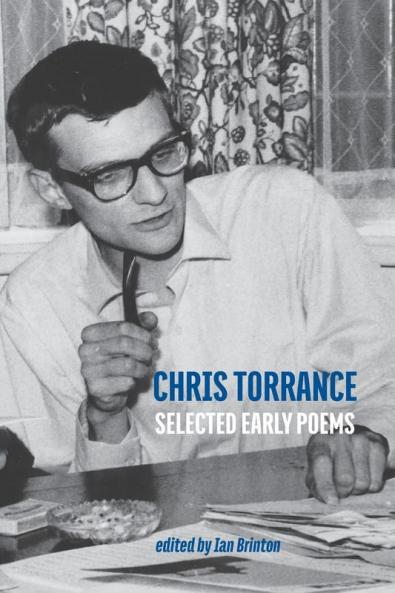
<p>One evening in 1961 in the Greyhound pub in Carshalton Surrey 20-year-old Chris Torrance - solicitor's clerk with novelistic ambitions - encountered a volatile Mob of nascent artists writers and musicians. For Torrance this was the most important day of my life. Dazzled he was soon joining in their activities: wild weekends in the country his first scary public readings and from 1963 co-editing the poetry and jazz magazine&nbsp;<em>Origins/Diversions</em>.</p><p>&nbsp;&nbsp;&nbsp;&nbsp;In literary terms Torrance's greatest influence from the group was Bill Wyatt who introduced him to useful short forms like haiku and to William Carlos Williams'&nbsp;<em>Paterson</em>. Wyatt later a prolific poet translator naturalist and the first Zen monk ordained in Britain remained a life-long friend and ally.</p><p>&nbsp;&nbsp;&nbsp;&nbsp;<em>Origins/Diversions</em>&nbsp;connected Torrance to other 'underground' writers and publishers including Tina Morris and Dave Cunliffe in Blackburn and through them Lee Harwood in London. In June 1964 Harwood came to Carshalton for a walk around Torrance's patch. Reciprocal visits followed with Torrance cycling to the East End where Harwood was writing his long poem&nbsp;<em>Cable Street</em>. They were very different people Torrance focussed on his local area and his local friends Harwood a cool elegant but friendly cosmopolitan feeding Torrance the exciting new writing via his job at Better Books in Charing Cross Road. Torrance now began finding his own voice as a poet and through Harwood's encouragement placed work in the Cambridge magazine&nbsp;<em>The English Intelligencer</em>. One of its editors Andrew Crozier published Torrance's first two books.</p><p>&nbsp;&nbsp;&nbsp;&nbsp;In the spring of 1965 Torrance gave up his 7 year career in solicitors' offices and joined the local Parks Department as a labourer. As the title&nbsp;<em>Green Orange Purple Red&nbsp;</em>implies he wanted a more sensual take on the world via his writing - a Keatsian ambition. About then he found a second-hand copy of&nbsp;<em>The New American Poetry</em> and embarked on a lifelong 'love affair' with those writers and that energy. In particular the enormous presence of Charles Olson seemed to confirm that - in terms of big ambition and local detail - Torrance was on the right track with his writing.</p><p>&nbsp;&nbsp;&nbsp;&nbsp;Validation came in July 1966 with 'The Carshalton Steam Laundry Vision'. Torrance was cutting the grass outside the Laundry when his vocation was revealed to him: 'I'm&nbsp;<em>going&nbsp;</em>to be a&nbsp;<em>poet'.</em>&nbsp;It wasn't a 'vision'; it was a powerful voice that had to be obeyed (I accepted it completely). As The Voice diminished into the clatter of machinery and the chatter of the laundry girls the path ahead lay clear.</p><p>&nbsp;&nbsp;&nbsp;&nbsp;In the autumn of 1967 Torrance and his partner Val settled in Bristol with Torrance working as a Parks Dept. labourer again. His near-3 year stay in Bristol was a transitional time with a tendency in his writing towards psychedelia and a broader spirituality becoming more evident.&nbsp;</p><p>&nbsp;&nbsp;&nbsp;&nbsp;In June 1970 Torrance moved to a cottage in pastoral/industrial South Wales to 'chew the lotus in peace' as John Wieners has it. He was to stay there for 50 years increasing the range and depth of his poetic vision but much of the foundations and shape of his future writing are here in this early work: inspiration from his locality from geology up; the prosodic links between music and words; a positive faith that anyone - taking himself as the model - could and should be creative; and importantly the idea of larger cycles of writing - as in&nbsp;<em>The Carshalton Poems</em>&nbsp;- culminating in his life's major work&nbsp;<em>The Magic Door</em>.</p><p><br></p><p>-Phil Maillard</p>

Piracy-free

Assured Quality

Secure Transactions

Fast Delivery

Sustainably Printed
Details
ISBN 13
9781848619098
Publication Date
-04-09-2023
Pages
-130
Weight
-187 grams
Dimensions
-152x229x7.75 mm
