



This Book is Out of Stock!
by
MuRu Lee
English


Paperback
₹1673
(All inclusive*)
Delivery Options
*COD & Shipping Charges may apply on certain items.
Review final details at checkout.
Looking to place a bulk order? SUBMIT DETAILS

Piracy-free

Assured Quality

Secure Transactions
About The Book
Description
Author
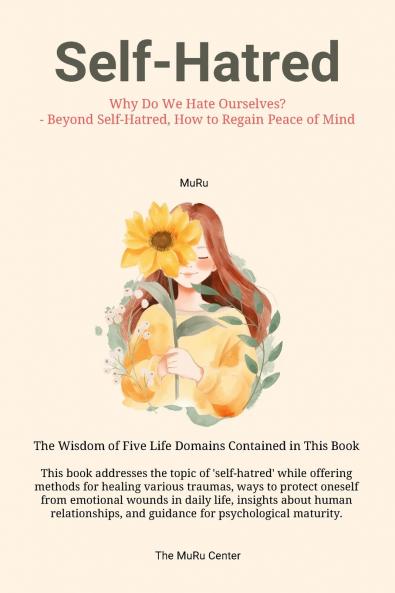
<p>By unraveling the unconscious chains of self-hatred through this book you will not only find solutions to your personal problems but also to issues involving others and a wide range of life's challenges.</p><p></p><p>This book addresses various approaches to healing trauma-including the theme of self-hatred-while also offering insights into how to avoid emotional wounds in daily life understand human relationships and guide oneself toward psychological maturity.</p><p></p><p><strong>Key Points of This Book:</strong></p><ol><li>Self-hatred is a psychological trait that everyone possesses to some degree. It can manifest as self-criticism severe self-deprecation self-loathing or guilt.</li><li>At the root of self-hatred lies concealed self-love and a sense of superiority. Attempts to become a better self have become distorted leading to negative outcomes.</li><li>We often identify with a negative self-image and strive to maintain it-an instinct to protect ourselves mistakenly at work.</li><li>Overcoming self-hatred requires not the mere suppression or neglect of it but understanding its mechanisms and bringing them into consciousness.</li><li>We must not view I as something defined by content or conditions but instead recognize our unconditional value as an existing being.</li><li>Hatred or projection toward others can be an expression of self-hatred. Recognizing and overcoming this is crucial.</li><li>Healthy relationships require the pursuit of horizontal love rather than vertical dependence.</li><li>By overcoming self-hatred and practicing genuine self-love we can lead happier and more abundant lives.</li></ol><p>&nbsp;</p><p><strong>The structure of this book's five chapters is as follows:</strong></p><p><strong>-Chapter 1 &lt;How Did Self-Love Turn into Self-Hatred?&gt;</strong> explores the hidden psychology behind self-hatred. It examines why we come to hate ourselves and reveals our original psychology. Through this understanding we discover that self-hatred isn't truly self-hatred allowing us to treat ourselves fairly and objectively.</p><p><strong>-Chapter 2 &lt;How Does Self-Hatred Become Hatred Towards Others?&gt;</strong> examines projection. Much of self-hatred stems from negative projection. Those who love themselves healthily don't unfairly hate others. By understanding our projection psychology we can free ourselves from both self-hatred and hatred toward others.</p><p><strong>-Chapter 3 &lt;'I' Am Not a Being Determined by Content&gt;</strong> focuses on identity-a crucial life issue. Many adults lack healthy identities despite being expected to guide children. This chapter helps us grasp the essence of identity and develop a healthy mature sense of self.</p><p><strong>-Chapter 4 &lt;Wounds It's Not About Not Experiencing Them But Making Them Insignificant&gt;</strong> addresses healing. Self-hatred often stems from past emotional wounds. Here we learn to neither obsess over nor suppress wounds but rather to embrace and overcome them.</p><p><strong>-Chapter 5 &lt;To Those Who Dream of Being the Protagonist of Relationships&gt;</strong> examines relationships and empathy. Self-hatred is both individual and collective. It introduces the concept of one with two polarities and two truths-we're neither separate entities nor a uniform whole. Through self-expansion we can transcend self-hatred.</p>
Piracy-free
Assured Quality
Secure Transactions
*COD & Shipping Charges may apply on certain items.
Review final details at checkout.
₹1673
Out Of Stock
All inclusive*
Details
ISBN 13
9798992299908
Publication Date
-29-12-2024
Pages
-286
Weight
-391 grams
Dimensions
-152x229x13.99 mm
