

English


Hardback
₹12031
₹15287
21.3% OFF
(All inclusive*)
Delivery Options
Please enter pincode to check delivery time.
*COD & Shipping Charges may apply on certain items.
Review final details at checkout.
Looking to place a bulk order? SUBMIT DETAILS

Piracy-free

Assured Quality

Secure Transactions
About The Book
Description
Author
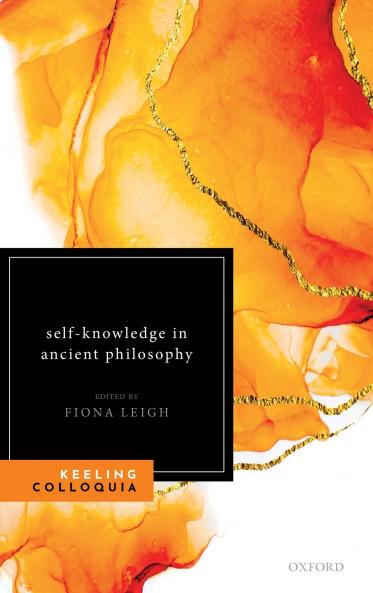
Self-knowledge - a person's knowledge of their own thoughts character and psychological states - has long been a central focus of philosophical enquiry. The concerns which occupy ancient thinkers with regard to self-knowledge however diverge in critical ways from contemporary<br>investigations on the topic. In this volume based upon the eighth Keeling Colloquium in Ancient Philosophy leading scholars explore the treatment of self-knowledge in ancient Greek thought particularly in Plato Aristotle Hellenistic thinkers and Plotinus. A number of chapters identify specific<br>modes of self-knowledge in ancient thought such as knowledge of one's individual moral or political character in Plato or one's own discursive thought as compared to that arising from the self-presence of intellect in Plotinus. Others identify interesting points of convergence with contemporary<br>thinking to make interventions in existing debates as well as to articulate new research questions such as whether Plato regarded self-knowledge as synoptic and diachronic in the Republic or whether self-knowledge is a condition on virtue for Aristotle. By exploring the distinctions between the<br>fundamental assumptions and conceptual frameworks in which ancient and modern philosophers examine self-knowledge this volume makes a novel contribution to current scholarship in the field.<br>
Piracy-free
Assured Quality
Secure Transactions
Delivery Options
Please enter pincode to check delivery time.
*COD & Shipping Charges may apply on certain items.
Review final details at checkout.
Details
ISBN 13
9780198786061
Publication Date
-01-05-2020
Pages
-258
Weight
-464 grams
Dimensions
-156x234x15.88 mm
