



₹11259
₹14682
23.31% OFF
(All inclusive*)
Hardback
Delivery Options
Please enter pincode to check delivery time.
*COD & Shipping Charges may apply on certain items.
Review final details at checkout.
Looking to place a bulk order? SUBMIT DETAILS
Delivery Options
Please enter pincode to check delivery time.
*COD & Shipping Charges may apply on certain items.
Review final details at checkout.
About The Book
Description
Author
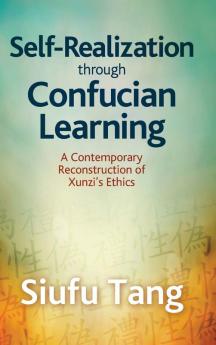
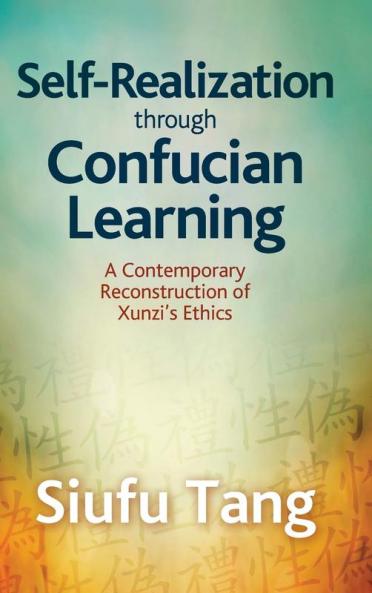
<p><b>Confucian philosopher Xunzi's moral thought is considered in light of the modern focus on self-realization.</b></p><p><i>Self-Realization through Confucian Learning</i> reconstructs Confucian thinker Xunzi's moral philosophy in response to the modern focus on self-realization. Xunzi (born around 310 BCE) claims that human <i>xing</i> (nature or native conditions) is without an ethical framework and has a tendency to dominate leading to bad judgments and bad behavior. Confucian ritual propriety (<i>li</i>) is needed to transform these human native conditions. Through <i>li</i> people become self-directing: in control of feelings and desires and in command of their own lives. Siufu Tang explicates Xunzi's understanding of the hierarchical structure of human agency to articulate why and how <i>li</i> is essential to self-realization. Ritual propriety also structures relationships to make a harmonious communal life possible. Tang's focus on self-realization highlights how Confucianism can address the individual as well as the communal and serve as a philosophy for contemporary times.</p>

Piracy-free

Assured Quality

Secure Transactions

Fast Delivery

Sustainably Printed
Details
ISBN 13
9781438461496
Publication Date
-01-09-2016
Pages
-192
Weight
-356 grams
Dimensions
-152x229x14.29 mm
