


English



Paperback
₹5110
₹6552
22.01% OFF
(All inclusive*)
Delivery Options
Please enter pincode to check delivery time.
*COD & Shipping Charges may apply on certain items.
Review final details at checkout.
Looking to place a bulk order? SUBMIT DETAILS

Piracy-free

Assured Quality

Secure Transactions
About The Book
Description
Author
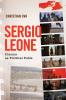
Spectacle myth fable - these words instantly leap to mind when considering director Sergio Leone's celebrated films. His popularization of the Spaghetti Western genre through works like <em>A Fistful of Dollars</em> (1964) and <em>Once Upon a Time in the West</em> (1968) continues to have a profound impact on filmmakers worldwide. In this exciting new study Italian film scholar Christian Uva explores a side of Leone's works rarely before discussed: the political. Grappling with the contradictions between Leone's politically critical cinematic eye and his aversion to ideological classification <em>Sergio</em> <em>Leone: Cinema as Political Fable</em> makes sense of how the director's internal political tensions shaped the radical themes of his Western fables. <p/>Looking at Leone and his films through a number of lenses the book examines the elements of Italian history and identity interwoven in the director's stories provides cultural context for a career spanning from Italy's fascist regime to Leone's death in 1989 and discusses the influences that formed Leone's directorial identity. Uva focuses in particular on the postmodernist theory behind Leone's works revealing the critical basis of his stylistic and narrative innovations and newly analyzing the most iconic sequences from <em>The Good the Bad and the Ugly</em> (1967) <em>Duck You Sucker</em> (1971) and <em>Once Upon a Time in America</em> (1984). An admirably thorough take on the man and his works <em>Sergio Leone: Cinema as Political Fable</em> provides fresh perspective on a director long-established in cinema canon.<br>
Piracy-free
Assured Quality
Secure Transactions
Delivery Options
Please enter pincode to check delivery time.
*COD & Shipping Charges may apply on certain items.
Review final details at checkout.
Details
ISBN 13
9780190942694
Publication Date
-07-02-2020
Pages
-148
Weight
-221 grams
Dimensions
-156x234x8.06 mm
