

English


₹6824
(All inclusive*)
Paperback
Delivery Options
Please enter pincode to check delivery time.
*COD & Shipping Charges may apply on certain items.
Review final details at checkout.
Looking to place a bulk order? SUBMIT DETAILS
Delivery Options
Please enter pincode to check delivery time.
*COD & Shipping Charges may apply on certain items.
Review final details at checkout.
About The Book
Description
Author
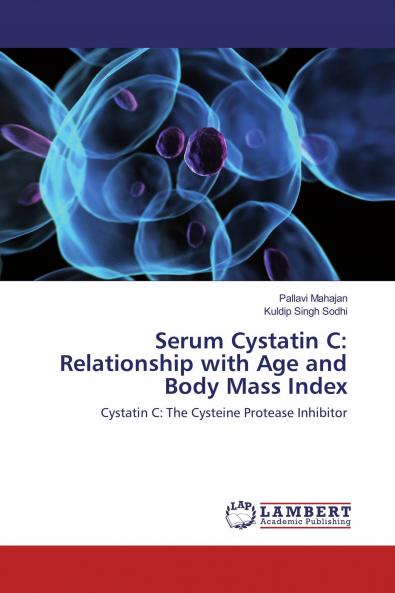
Cystatin C is a cationic low molecular weight (13 kDa) cysteine protease inhibitor encoded by the CST3 gene that is ubiquitously expressed at moderate levels. It is freely filtered at the glomerulus and practically completely reabsorbed and catabolised by tubular cells. Obesity is an epidemic of the 21st century and is a major causative factor for many other metabolic disorders and certain cancers and premature deaths in developing countries. Overweight obesity and the metabolic syndrome have recently emerged as strong risk factors for chronic kidney disease (CKD) and end-stage renal disease (ESRD). The pro-atherogenic cysteine protease Cathepsin S (a biomolecule expressed in human adipose tissue and whose gene expression was strongly correlated with body mass index BMI) is increased in obese subjects. Cathepsins’ enzymatic activity is regulated by endogenous inhibitors the most abundant being cystatin C. Though cystatin C is conventionally considered a renal biomarker shows significant correlation with age and body mass index. Cystatin C potential candidate affecting adipose tissue biology and obesity-linked complications could serve as a predictor of metabolic syndrome.

Piracy-free

Assured Quality

Secure Transactions

Fast Delivery

Sustainably Printed
Details
ISBN 13
9786137348529
Publication Date
-08-02-2018
Pages
-160
Weight
-215 grams
Dimensions
-150x220x8.82 mm
