


English



Paperback
₹1693
₹1863
9.13% OFF
(All inclusive*)
Delivery Options
Please enter pincode to check delivery time.
*COD & Shipping Charges may apply on certain items.
Review final details at checkout.
Looking to place a bulk order? SUBMIT DETAILS
Delivery Options
Please enter pincode to check delivery time.
*COD & Shipping Charges may apply on certain items.
Review final details at checkout.
About The Book
Description
Author
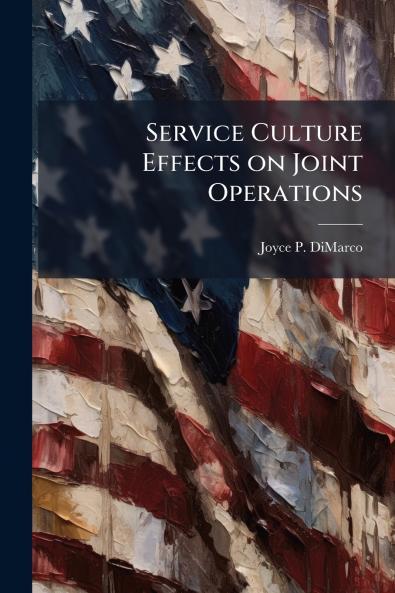
<p>Knowing oneself is critical to efficient and effective operations in any sphere of human endeavor. This is particularly important in the endeavor of warfare where human life is the medium of exchange and the fate of nations lies in the balance. Currently U.S. military forces are involved in the largest and most important operations since the Vietnam era while simultaneously attempting to affect the most radical transformation perhaps in American military history. Within the U.S. military services a thorough and clear self awareness is absolutely essential to the success in both these efforts. A key aspect of self awareness successful joint operations and effective transformation requires a thorough understanding of the component service cultures and their potential to effect operations. This paper proposes that unique U.S. military service cultures exist that they have effects on operations and that understanding the unique service cultures is an important component in planning operations as well as planning transformation. RAND corporation analyst Carl Builder's central thesis in his 1989 work The Masks of War is that each service is influenced in its actions by an inherent service culture. This culture is a product of the service's history and the personality types of its key leaders. Service culture manifests itself in a variety of ways including the service's budget priorities doctrine officer training evaluation and assignment. The cultural phenomenon described by Builder eighteen years ago is inherently at odds with the U.S. military's developing vision to operate in an integrated inter-service way. Joint operations yield benefits by capitalizing on service strengths in an efficient and synergistic manner. The emphasis on service integration has increased greatly since Builder first explained his thesis. The purpose of this paper is to attempt to evaluate the current validity of Builder's arguments given the ever increasing emphasis on jointness sinc</p><p>This work has been selected by scholars as being culturally important and is part of the knowledge base of civilization as we know it. This work was reproduced from the original artifact and remains as true to the original work as possible. Therefore you will see the original copyright references library stamps (as most of these works have been housed in our most important libraries around the world) and other notations in the work.</p><p>This work is in the public domain in the United States of America and possibly other nations. Within the United States you may freely copy and distribute this work as no entity (individual or corporate) has a copyright on the body of the work.</p><p>As a reproduction of a historical artifact this work may contain missing or blurred pages poor pictures errant marks etc. Scholars believe and we concur that this work is important enough to be preserved reproduced and made generally available to the public. We appreciate your support of the preservation process and thank you for being an important part of keeping this knowledge alive and relevant.</p>

Piracy-free

Assured Quality

Secure Transactions

Fast Delivery

Sustainably Printed
Details
ISBN 13
9781288318681
Publication Date
-19-11-2012
Pages
-80
Weight
-128 grams
Dimensions
-156x234x4.31 mm
