


This Book is Out of Stock!
English


Hardback
₹2880
(All inclusive*)
Delivery Options
*COD & Shipping Charges may apply on certain items.
Review final details at checkout.
Looking to place a bulk order? SUBMIT DETAILS
*COD & Shipping Charges may apply on certain items.
Review final details at checkout.
₹2880
Out Of Stock
All inclusive*
About The Book
Description
Author
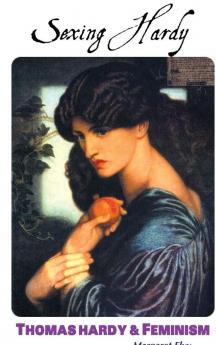
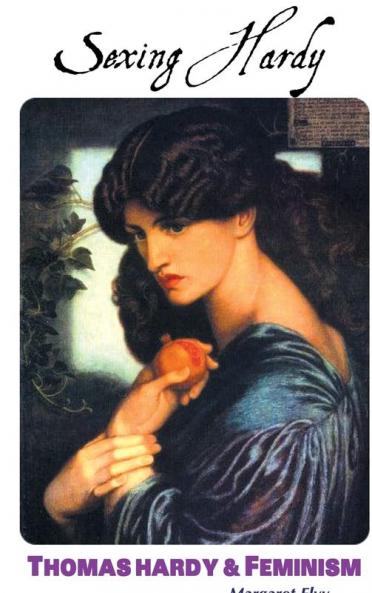
SEXING HARDY: THOMAS HARDY AND FEMINISMBy Margaret Levy <P> There are surprisingly few feminist analyses of the work of British novelist Thomas Hardy and most do not get beyond vague notions of gender bias and sexism in the Kate Millett and second wave feminist manner. Margaret Elvy's book however uses up-to-date research in the fields of cultural studies feminist poetics gay lesbian and queer theory. This new postmodern and incisive exploration of Thomas Hardy offers an exciting and radical reappraisal of the discourses of gender desire class economy socialization identity and patriarchy in his fiction and poetry. <P> This third edition of Sexing Hardy has been completely updated and includes a new introduction and a new bibliography. <P> EXTRACT FROM CHAPTER ONE: THOMAS HARDY AND FEMINISM <P> Is Thomas Hardy a feminist? Are Thomas Hardy's works feminist? How much do his works reflect and bolster the patriarchal attitudes and behaviour of his era and how much do they question them? What is the relation between Hardy and the feminists of his time? And what is the link between Hardy's works and the feminism of the early 21st century? <P> This book approaches Thomas Hardy's fiction from a feminist perspective in particular in the light of 'second wave' feminism and 'third wave'/ postmodern feminism. <P> Thomas Hardy's theme is what you might call 'Wessexuality' 'Wes-sex-mania' Wessexual politics. Hardy's works can be regarded as chauvinist patriarchal and masculinist and yet they question notions of sexism gender identity patriarchy and masculinism. A text such as Tess of the d'Urbervilles is 'traditional' and follows patriarchal codes and morals. Yet it also questions them and offers a number of feminist critiques of late 19th century society. <P> In his letters Thomas Hardy proposed feminist views; he wrote to feminists such as the suffragette leader Millicent Fawcett that a child was the mother's own business not the father's. One can see these feminist sentiments in for example Hardy's treatment of Tess in her motherhood: she works in the fields just a few weeks after the birth even though she is melancholy (she might be suffering a mild form of post-natal depression). Tess further subverts patriarchy by taking her child's baptism into her own hands. She goes against her father the vicar and the whole church with her self-made baptism. <P> [...] Thomas Hardy's novels were not always received favourably by women critics and readers. Hardy's own views expressed outside of the novels did not always square with those of feminists of the 1880s and 1890s. The ideological gap between Hardy and the women critics and feminists of the late 19th century is illustrated by Hardy's remark to Edmund Yates (in 1891): 'many of my novels have suffered so much from misrepresentation as being attacks on womankind'. Hardy hoped that works such as Tess of the d'Urbervilles would redress the balance. <P> Illustrated (including biographical images and images from film and TV adaptations of Hardy's fiction). <P> Bibliography and notes. 236 pages. Also available in paperback. www.crmoon.com

Piracy-free

Assured Quality

Secure Transactions

Fast Delivery

Sustainably Printed
Details
ISBN 13
9781861715463
Publication Date
-04-07-2016
Pages
-236
Weight
-434 grams
Dimensions
-156x234x14.29 mm
