


English



Hardback
₹8260
₹9494
13% OFF
(All inclusive*)
Delivery Options
Please enter pincode to check delivery time.
*COD & Shipping Charges may apply on certain items.
Review final details at checkout.
Looking to place a bulk order? SUBMIT DETAILS
Delivery Options
Please enter pincode to check delivery time.
*COD & Shipping Charges may apply on certain items.
Review final details at checkout.
About The Book
Description
Author
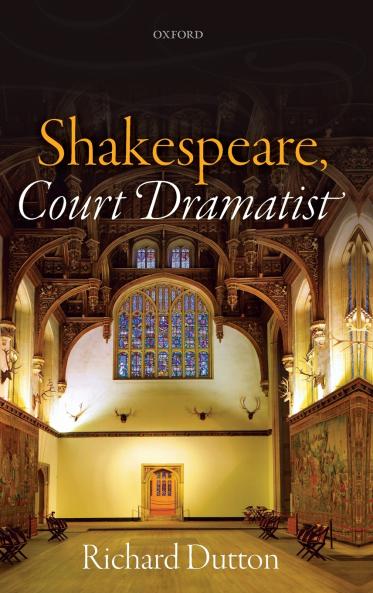
Shakespeare Court Dramatist centres around the contention that the courts of both Elizabeth I and James I loomed much larger in Shakespeare's creative life than is usually appreciated. Richard Dutton argues that many perhaps most of Shakespeare's plays have survived in versions adapted for court presentation where length was no object (and indeed encouraged) and rhetorical virtuosity was appreciated. The first half of the study examines the court'spatronage of the theatre during Shakespeare's lifetime and the crucial role of its Masters of the Revels who supervised all performances there (as well as censoring plays for public performance). Dutton examines the emergence of the Lord Chamberlain's Men and the King's Men to whom Shakespeare was attached astheir 'ordinary poet' and reviews what is known about the revision of plays in the early modern period. The second half of the study focuses in detail on six of Shakespeare's plays which exist in shorter less polished texts as well as longer more familiar ones: Henry VI Part II and III Romeo and Juliet Henry V Hamlet and The Merry Wives of Windsor. Shakespeare Court Dramatist argues that they are not cut down from thosefamiliar versions but poorly-reported originals which Shakespeare revised for court performance into what we know best today. More localised revisions in such plays as Titus Andronicus Richard II and Henry IV Part II can also best be explained in this context. The court Richard Dutton argues is what made Shakespeare Shakespeare.

Piracy-free

Assured Quality

Secure Transactions

Fast Delivery

Sustainably Printed
Details
ISBN 13
9780198777748
Publication Date
-18-12-2014
Pages
-334
Weight
-568 grams
Dimensions
-156x234x19.05 mm
