


This Book is Out of Stock!
English


₹4989
(All inclusive*)
Paperback
Delivery Options
*COD & Shipping Charges may apply on certain items.
Review final details at checkout.
Looking to place a bulk order? SUBMIT DETAILS
*COD & Shipping Charges may apply on certain items.
Review final details at checkout.
₹4989
Out Of Stock
All inclusive*
About The Book
Description
Author
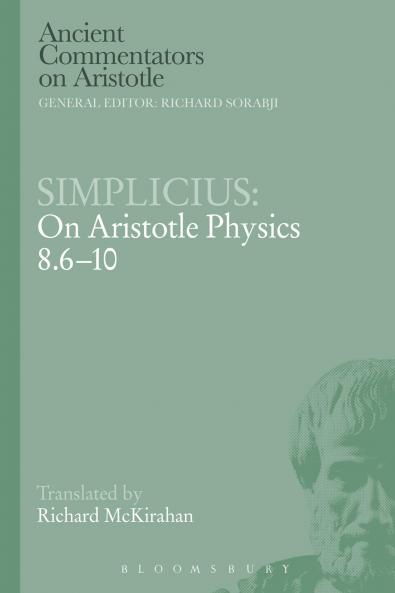
Aristotle's <i>Physics</i> is about the causes of motion and culminates in a proof that God is needed as the ultimate cause of motion. Aristotle argues that things in motion need to be moved by something other than themselves - he rejects Plato's self-movers. On pain of regress there must be an unmoved mover. If this unmoved mover is to cause motion eternally it needs infinite power. It cannot then be a body since bodies being of finite size cannot house infinite power. The unmoved mover is therefore an incorporeal God. Simplicius reveals that his teacher Ammonius harmonised Aristotle with Plato to counter Christian charges of pagan disagreement by making Aristotle's God a cause of beginningless movement but of beginningless existence of the universe. Eternal existence not less than eternal motion calls for an infinite and hence incorporeal force. By an irony this anti-Christian interpretation turned Aristotle's God from a thinker into a certain kind of Creator and so helped to make Aristotle's God acceptable to St Thomas Aquinas in the thirteenth century. This text provides a translation of Simplicius' commentary on Aristotle's work.

Piracy-free

Assured Quality

Secure Transactions

Fast Delivery

Sustainably Printed
Details
ISBN 13
9781780938974
Publication Date
-10-04-2014
Pages
-253
Weight
-366 grams
Dimensions
-155.96x233.93x13.65 mm
