

English


Hardback
₹10771
₹17965
40.04% OFF
(All inclusive*)
Delivery Options
Please enter pincode to check delivery time.
*COD & Shipping Charges may apply on certain items.
Review final details at checkout.
Looking to place a bulk order? SUBMIT DETAILS
Delivery Options
Please enter pincode to check delivery time.
*COD & Shipping Charges may apply on certain items.
Review final details at checkout.
About The Book
Description
Author(s)
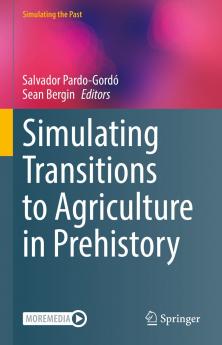
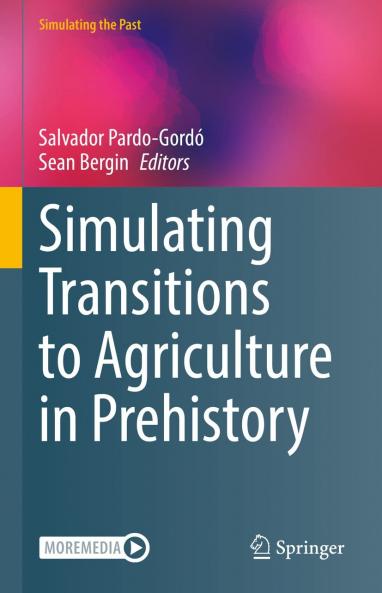
<p>This book highlights new and innovative approaches to archaeological research using computational modeling while focusing on the Neolithic transition around the world.</p>The transformative effect of the spread and adoption of agriculture in prehistory cannot be overstated.&nbsp;Consequently archaeologists have often focused their research&nbsp;on&nbsp;this transition hoping to understand both the ecological causes and impacts of this shift as well as the social motivations and constraints&nbsp;involved.&nbsp;Given the&nbsp;complex interplay of socio-ecological factors&nbsp;the answers&nbsp;to these types of questions cannot be&nbsp;found using&nbsp;traditional archaeological methods alone. Computational modeling techniques have emerged as an effective approach for better&nbsp;understanding prehistoric&nbsp;data sets and the linkages between social and ecological factors at play during periods of subsistence change. Such techniques include agent-based modeling Bayesian modeling GIS modeling of the prehistoric environment&nbsp;and the&nbsp;modeling of small-scale agriculture. As more archaeological data sets aggregate regarding the transition to agriculture researchers are often left with few ways to relate these&nbsp;sets&nbsp;to one another.<p></p><p>Computational modeling techniques such as those described&nbsp;above represent&nbsp;a critical next step in&nbsp;providing&nbsp;archaeological analyses that are&nbsp;important for understanding human&nbsp;prehistory&nbsp;around&nbsp;the world.&nbsp;&nbsp;Given its scope this book&nbsp;will appeal to the many interdisciplinary scientists and researchers&nbsp;whose work involves&nbsp;archaeology and computational social science.&nbsp;</p><p>Chapter “The Spread of Agriculture: Quantitative Laws in Prehistory?” is available open access under a Creative Commons Attribution 4.0 International License via springer.com.<br></p><p><br></p>

Piracy-free

Assured Quality

Secure Transactions

Fast Delivery

Sustainably Printed
Details
ISBN 13
9783030836429
Publication Date
-25-01-2022
Pages
-276
Weight
-421 grams
Dimensions
-156x234x17.46 mm
