


English



₹4356
₹5206
16.33% OFF
(All inclusive*)
Paperback
Delivery Options
Please enter pincode to check delivery time.
*COD & Shipping Charges may apply on certain items.
Review final details at checkout.
Looking to place a bulk order? SUBMIT DETAILS
Delivery Options
Please enter pincode to check delivery time.
*COD & Shipping Charges may apply on certain items.
Review final details at checkout.
About The Book
Description
Author
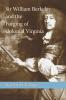
Sir William Berkeley (1605–1677) influenced colonial Virginia more than any other man of his era. An Oxford-educated playwright soldier and diplomat Berkeley won appointment as governor of Virginia in 1641 after a decade in the court of King Charles I. Between his arrival in Jamestown the following year and his death Berkeley became Virginia’s leading politician and planter indelibly stamping his ambitions accomplishments and ultimately his failures upon the colony. In a masterly biography Warren M. Billings offers the first full-scale treatment of Berkeley’s life revealing the extent to which Berkeley shaped early Virginia and linking his career to the wider context of seventeenth-century Anglo-American history. During Berkeley’s governorship Virginia grew from a colonial outpost to a roughhewn imitation of its British origins—a center of agriculture commerce and New World society. Berkeley’s desire to diversify the colony’s economy led to increased trade with markets in North America the West Indies and Holland. His plantation Green Spring served as a model for Virginia’s planter aristocracy and his creation of the General Assembly a bicameral representative legislature helped establish the origins of American political self-rule. Yet Berkeley’s increasingly questionable policies also precipitated Bacon’s Rebellion in 1676 led by his second wife’s cousin. The most serious challenge to royal authority in the colonies before the American Revolution it prompted tighter control of Virginia from London and Berkeley’s return to England in disgrace. Despite his central role in the development of Virginia Berkeley has been as misunderstood by historians as he was by his contemporaries his motives and character a source of contention for three centuries. Drawing on an unrivaled knowledge of Berkeley’s papers many never examined before Billings depicts Berkeley as a self-made Virginian a man who sought new opportunities in America and was so swayed by his experiences that Virginia soon gave greater definition to his life and personality than had England. Deeply informed and engagingly told this biography offers the meticulous attention its remarkable subject has long deserved.

Piracy-free

Assured Quality

Secure Transactions

Fast Delivery

Sustainably Printed
Details
ISBN 13
9780807134436
Publication Date
-01-03-2010
Pages
-312
Weight
-425 grams
Dimensions
-152x229x16.59 mm
