


English




Paperback
₹2086
₹2294
9.07% OFF
(All inclusive*)
Delivery Options
Please enter pincode to check delivery time.
*COD & Shipping Charges may apply on certain items.
Review final details at checkout.
Looking to place a bulk order? SUBMIT DETAILS

Piracy-free

Assured Quality

Secure Transactions
About The Book
Description
Author
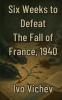
<p>In May 1940 the French Army was widely seen as the strongest land force in Europe. By mid-June France had fallen its government in flight its soldiers marching into captivity. Between those dates lies one of the most misunderstood campaigns of the Second World War.</p><p>Told through the eyes of Lieutenant Pierre Dubois a fortress engineer at the massive Maginot Line position of Fort Hackenberg this book follows the Battle of France from the illusion of security to the shock of defeat - and into the prison camps where officers have nothing left but time to ask what went wrong.</p><p>Inside the fort's concrete galleries Dubois and his men begin the campaign convinced that technology planning and firepower have made France impregnable. As German forces break through at Sedan race to the Channel and encircle entire armies that confidence shatters. Orders arrive late or not at all. Communications fail. Refugee columns clog the roads. Air attack becomes a constant terrifying presence.</p><p>In a transit compound attached to Stalag IV-D in Saxony Dubois joins officers from armoured divisions staff headquarters and the Dunkirk perimeter. Around a rough table of Red Cross crates they start to piece together the larger story of France's defeat.</p><p>The book weaves front-line narrative with clear structured analysis showing how tactical shocks and deep structural flaws combined to bring down a great power at unprecedented speed:</p><ul><li>Doctrine built for 1918 not 1940: a defensive Maginot mentality facing an enemy who treated fortifications as obstacles to go around not walls to assault.</li><li>Blitzkrieg as a system: tanks aircraft artillery and radio used together to create tempo shock and constant uncertainty.</li><li>Leadership and command failure: cautious headquarters rigid chains of command and senior officers chosen for bureaucracy rather than battlefield imagination.</li><li>Politics and industry: revolving-door governments budget cuts and stop-start rearmament versus a regime that aligned strategy economy and propaganda to a single goal.</li><li>Intelligence that counted weapons but missed ideas: German doctrine and operational thinking evolving faster than French analysts could accept.</li><li>Air power and morale: dive-bombers used as flying artillery a scattered French air force and the psychological impact of realising that the sky itself now belonged to the enemy.</li><li>Alliance failure: French British and Belgian forces fighting side by side but not truly together with incompatible doctrines equipment and priorities.</li></ul><p>By the time Dubois closes his makeshift journal in the dim light of the camp gymnasium the military verdict is clear: France did not fall because its soldiers lacked courage but because its institutions doctrine and leadership proved unable to match a new form of war.</p><p>The Battle of France lasted six weeks. Its consequences - occupation collaboration resistance and a transformed balance of power in Europe - shaped the rest of the Second World War and the world that followed. This book shows how and why it happened.</p>
Piracy-free
Assured Quality
Secure Transactions
Delivery Options
Please enter pincode to check delivery time.
*COD & Shipping Charges may apply on certain items.
Review final details at checkout.
Details
ISBN 13
9798232179595
Publication Date
-11-12-2025
Pages
-140
Weight
-149 grams
Dimensions
-127x203x7.62 mm
