

English


Paperback
₹8526
(All inclusive*)
Delivery Options
Please enter pincode to check delivery time.
*COD & Shipping Charges may apply on certain items.
Review final details at checkout.
Looking to place a bulk order? SUBMIT DETAILS

Piracy-free

Assured Quality

Secure Transactions
About The Book
Description
Author
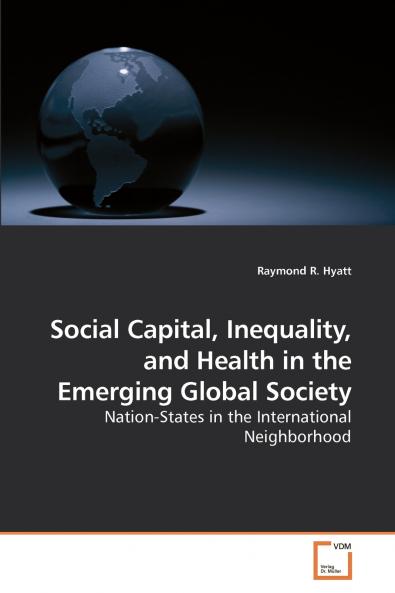
This book presents an integrated theoretical approach to the definition of the social capital of the nation-state within the international neighborhood. Three perspectives on social capital are examined; as participation in voluntary organizations as embedded in network ties and at the intersection of social structure and agency. Allocation tradeoffs of resources to security versus welfare instrumental supports that address resource dependencies and the equality of opportunity resulting from normative convergence within the community are examined for some 90 countries over 29 years. Using life expectancy and infant mortality as measures of well-being this analysis shows that state participation in global society has a positive effect on population well-being including lower levels of resources needed for security increased trade and more opportunities for women. Education for women is shown to be the only action that is resistant to international inequality and the growing hegemony within the international neighborhood. Finally a case-study comparison of life expectancy and infant mortality between Japan and Brazil over the later part of the 20th century is presented.
Piracy-free
Assured Quality
Secure Transactions
Delivery Options
Please enter pincode to check delivery time.
*COD & Shipping Charges may apply on certain items.
Review final details at checkout.
Details
ISBN 13
9783639217261
Publication Date
-02-12-2009
Pages
-268
Weight
-367 grams
Dimensions
-150x220x14.37 mm
