


English





Paperback
₹4426
₹5757
23.12% OFF
(All inclusive*)
Delivery Options
Please enter pincode to check delivery time.
*COD & Shipping Charges may apply on certain items.
Review final details at checkout.
Looking to place a bulk order? SUBMIT DETAILS
Delivery Options
Please enter pincode to check delivery time.
*COD & Shipping Charges may apply on certain items.
Review final details at checkout.
About The Book
Description
Author
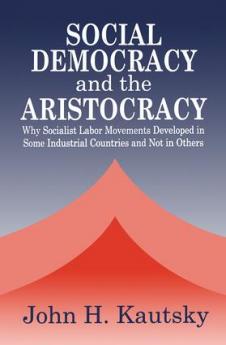
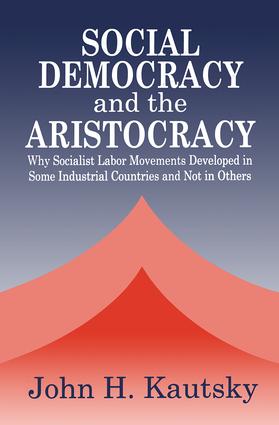
Ever since the rise of mass labor movements in the late nineteenth century socialism has been seen as an inevi- table and antagonistic response to capitalism and the spread of industrialization. Over the course of the twentieth century however socialism's failure to gain ground in the United States and most of the non-Western world exposed the limited Eurocentric views of socialist theorists and also the inadequacy of the theory as it applied to Europe as well. John Kautsky argues that a key factor in the development of social democratic labor movements was the persistence of powerful remnants of aristocratic institutions and ideologies whose survival into the industrial age preserved exclusionary hierarchies. These led in turn to radicalism and class consciousness among workers.Kautsky traces the evolution of socialist labor movements in Europe and Japan where aristocratic elements were still strong detailing the survival of aristocratic privilege and the concomitants of worker class consciousness and demands for equality. He shows how social democratic reliance on free elections was primarily a weapon against the aristocracy rather than capitalism. Contradicting socialist theory working-class growth came to an end class lines became blurred and a considerable degree of equality was achieved through the welfare state. Kautsky turns to those countries that were sufficiently industrialized to have large numbers of workers but also had reasonably free elections civil liberties and less repression of trade unions. Though the United States Canada post-Soviet Russia Mexico and India have very different histories and societies their workers have not confronted a powerful aristocracy. Great Britain the first and for long the most advanced industrial country was virtually the last to develop a socialist labor movement. In contrast socialist movements in Canada and the United States where egalitarian traditions were strong found little support. Kautsky's concluding chapters treat the spread of corruption the rise of new oligarchies in Russia and the position of workers no longer honored and politically weak. In its innovative perspective on long-held theories and its currency for contemporary problems Social Democracy and Aristocracy is an important contribution to political thought in the post-Marxist world. Its global approach makes it uniquely valuable for the comparative study of labor history and economic development.

Piracy-free

Assured Quality

Secure Transactions

Fast Delivery

Sustainably Printed
Details
ISBN 13
9781138514652
Publication Date
-16-04-2018
Pages
-242
Weight
-333 grams
Dimensions
-152x229x13.03 mm
