

English


Paperback
₹3169
₹3837
17.41% OFF
(All inclusive*)
Delivery Options
Please enter pincode to check delivery time.
*COD & Shipping Charges may apply on certain items.
Review final details at checkout.
Looking to place a bulk order? SUBMIT DETAILS
Delivery Options
Please enter pincode to check delivery time.
*COD & Shipping Charges may apply on certain items.
Review final details at checkout.
About The Book
Description
Author
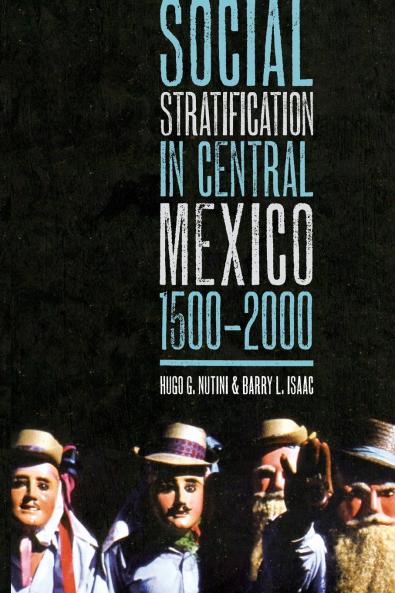
<p>In Aztec and colonial Central Mexico every individual was destined for lifelong placement in a legally defined social stratum or estate. Social mobility became possible after independence from Spain in 1821 and increased after the 1910-1920 Revolution. By 2000 the landed aristocracy that was for long Mexico's ruling class had been replaced by a plutocracy whose wealth derives from manufacturing commerce and finance-but rapid growth of the urban lower classes reveals the failure of the Mexican Revolution and subsequent agrarian reform to produce a middle-class majority. These evolutionary changes in Mexico's class system form the subject of <i>Social Stratification in Central Mexico 1500-2000</i> the first long-term comprehensive overview of social stratification from the eve of the Spanish Conquest to the end of the twentieth century.</p> <p>The book is divided into two parts. Part One concerns the period from the Spanish Conquest of 1521 to the Revolution of 1910. The authors depict the main features of the estate system that existed both before and after the Spanish Conquest the nature of stratification on the haciendas that dominated the countryside for roughly four centuries and the importance of race and ethnicity in both the estate system and the class structures that accompanied and followed it. Part Two portrays the class structure of the post-revolutionary period (1920 onward) emphasizing the demise of the landed aristocracy the formation of new upper and middle classes the explosive growth of the urban lower classes and the final phase of the Indian-mestizo transition in the countryside.</p>

Piracy-free

Assured Quality

Secure Transactions

Fast Delivery

Sustainably Printed
Details
ISBN 13
9780292723511
Publication Date
-01-06-2009
Pages
-282
Weight
-386 grams
Dimensions
-152x229x16.14 mm
