

English


Hardback
₹10518
₹13512
22.16% OFF
(All inclusive*)
Delivery Options
Please enter pincode to check delivery time.
*COD & Shipping Charges may apply on certain items.
Review final details at checkout.
Looking to place a bulk order? SUBMIT DETAILS
Delivery Options
Please enter pincode to check delivery time.
*COD & Shipping Charges may apply on certain items.
Review final details at checkout.
About The Book
Description
Author
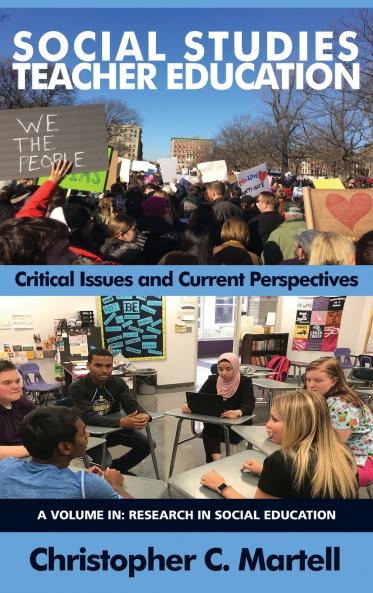
<p>Over the past decade the world has experienced a major economic collapse the increasing racial inequity and high-profile police killings of unarmed Black and Brown people the persistence of global terrorism a large-scale refugee crisis and the negative impacts of global warming. In reaction to social instability there are growing populist movements in the United States and across the world which present major challenges for democracy. Concurrently there has been a rise of grassroots political movements focused on increasing equity in relation to race gender class sexual orientation and religion. The role of social studies teachers in preparing the next generation of democratic citizens has never been more important and the call for more social studies teacher educators to help teachers address these critical issues only gets louder.<br />This volume examines how teacher educators are (or are not) supporting beginning and experienced social studies teachers in such turbulent times and it offers suggestions for moving the field forward by better educating teachers to address growing local national and global concerns. In their chapters authors in social studies education present research with implications for practice related to the following topics: race gender sexual orientation immigration religion disciplinary literacy global civics and social justice. This book is guided by the following overarching questions: What can the research tell us about preparing and developing social studies teachers for an increasingly complex interconnected and rapidly changing world? How can we educate social studies teachers to &ldquo;teach against the grain&rdquo; (Cochran-Smith 1991 2001b) centering their work on social justice social change and social responsibility?</p>

Piracy-free

Assured Quality

Secure Transactions

Fast Delivery

Sustainably Printed
Details
ISBN 13
9781641130479
Publication Date
-20-10-2017
Pages
-246
Weight
-447 grams
Dimensions
-156x234x15.88 mm
