


English


Paperback
₹1713
₹1857
7.75% OFF
(All inclusive*)
Delivery Options
Please enter pincode to check delivery time.
*COD & Shipping Charges may apply on certain items.
Review final details at checkout.
Looking to place a bulk order? SUBMIT DETAILS

Piracy-free

Assured Quality

Secure Transactions
About The Book
Description
Author
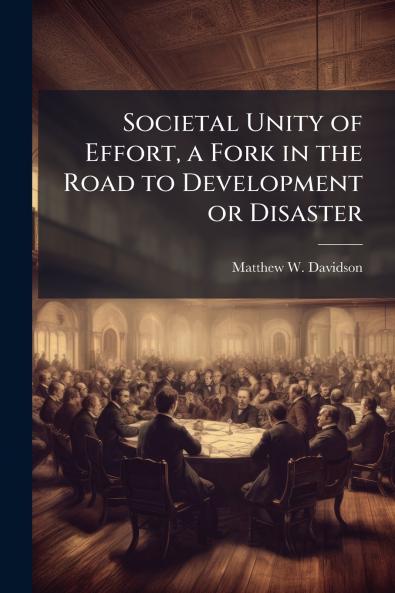
<p>Throughout history scholars have studied the development of states and posed the question why do some states develop more than other states? In addressing this question most studies have focused on the economic and political elements of the state. This paper analyzes the question: Can we assess state development potential by studying the societal or cultural elements of the state? This paper uses case studies of South America Africa and Asia to demonstrate the correlation between societal composition traits and characteristics and development as defined by the United Nations and The World Bank. This paper also endeavors to develop and present a concept that provides a framework for assessing state development potential based on societal elements. I term this concept unity of effort. The unity of effort concept utilizes three components to assess the sub-societal elements of the state -- (1) commonality of interests (2) achievement orientation and (3) motivational mechanisms. By applying the unity of effort concept to South America Africa and Asia we identify inhibiting social characteristics common among underdeveloped states. The identification and acknowledgement of these limiting and inhibiting traits and characteristics are first steps toward finding ways to overcome these impediments and attempt to solve state development problems across the globe. Current United States and international norms and policies constrain the way we view possible solutions to development problems today. A broader perspective with a focus on the long-term potential for security and human dignity may be required to resolve these issues. Through this paper I hope to inform and provide considerations for state building endeavors by the United States and others.</p><p>This work has been selected by scholars as being culturally important and is part of the knowledge base of civilization as we know it. This work was reproduced from the original artifact and remains as true to the original work as possible. Therefore you will see the original copyright references library stamps (as most of these works have been housed in our most important libraries around the world) and other notations in the work.</p><p>This work is in the public domain in the United States of America and possibly other nations. Within the United States you may freely copy and distribute this work as no entity (individual or corporate) has a copyright on the body of the work.</p><p>As a reproduction of a historical artifact this work may contain missing or blurred pages poor pictures errant marks etc. Scholars believe and we concur that this work is important enough to be preserved reproduced and made generally available to the public. We appreciate your support of the preservation process and thank you for being an important part of keeping this knowledge alive and relevant.</p>
Piracy-free
Assured Quality
Secure Transactions
Delivery Options
Please enter pincode to check delivery time.
*COD & Shipping Charges may apply on certain items.
Review final details at checkout.
Details
ISBN 13
9781288320639
Publication Date
-19-11-2012
Pages
-70
Weight
-114 grams
Dimensions
-156x234x3.79 mm
