

English


Paperback
₹1561
₹1600
2.44% OFF
(All inclusive*)
Delivery Options
Please enter pincode to check delivery time.
*COD & Shipping Charges may apply on certain items.
Review final details at checkout.
Looking to place a bulk order? SUBMIT DETAILS
Delivery Options
Please enter pincode to check delivery time.
*COD & Shipping Charges may apply on certain items.
Review final details at checkout.
About The Book
Description
Author
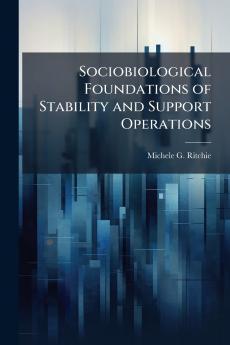
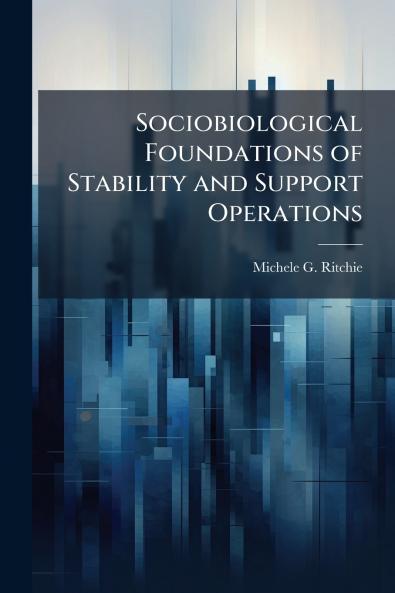
<p>Conflict is as old as humankind itself. Why man fights can be explained through culture and biology. With the fall of the Soviet empire in 1989 a global collective conscience has surfaced with regard to nations intervening in internal and international crises. Though the United Nations (UN) has undertaken peace operations since its inception it has taken an increasingly active role in stability and support operations (SASO) in the post-Cold War world. In an era of dwindling resources within the Department of Defense United States (US) participation in stability and support operations has been and promises to be in the future a significant commitment of scarce national treasure. Stability and support operations are a polarizing and pressing issue on the social and political agendas of nations and the United Nations. The settling of disputes by a third party is greatly influenced by that party's ability to change the behavior of the belligerents. Without a thorough understanding of why man wages war intervening third parties are unable to accurately identify the underlying causes of the conflict and the incentives and disincentives in modifying the belligerents' behavior. In order to wisely efficiently and (most importantly) successfully commit national treasure in support of stability and support operations the civilian leaders politicians and combatant commanders of the United States must make informed decisions based on analysis of the sources of the conflict and the predicted efficacy of courses of action to alter the belligerents' behavior. Apprehending the cultural and biological foundations of why man fights is fundamental to understanding the mental depth of the battle space ensuring operational versatility in new environments and allowing rapid shifts of cultural agility in order to seize the initiative in any environment. This cross-cultural exploitation gives the Army a critical perspective to see into situations and act decisively knowledgea</p><p>This work has been selected by scholars as being culturally important and is part of the knowledge base of civilization as we know it. This work was reproduced from the original artifact and remains as true to the original work as possible. Therefore you will see the original copyright references library stamps (as most of these works have been housed in our most important libraries around the world) and other notations in the work.</p><p>This work is in the public domain in the United States of America and possibly other nations. Within the United States you may freely copy and distribute this work as no entity (individual or corporate) has a copyright on the body of the work.</p><p>As a reproduction of a historical artifact this work may contain missing or blurred pages poor pictures errant marks etc. Scholars believe and we concur that this work is important enough to be preserved reproduced and made generally available to the public. We appreciate your support of the preservation process and thank you for being an important part of keeping this knowledge alive and relevant.</p>

Piracy-free

Assured Quality

Secure Transactions

Fast Delivery

Sustainably Printed
Details
ISBN 13
9781288321780
Publication Date
-21-11-2012
Pages
-52
Weight
-89 grams
Dimensions
-156x234x2.84 mm
