



This Book is Out of Stock!
English


Hardback
₹7083
₹8075
12.28% OFF
(All inclusive*)
Delivery Options
*COD & Shipping Charges may apply on certain items.
Review final details at checkout.
Looking to place a bulk order? SUBMIT DETAILS

Piracy-free

Assured Quality

Secure Transactions
About The Book
Description
Author
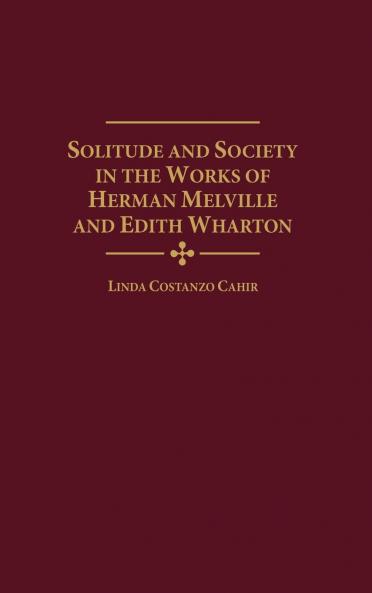
The interplay between solitude and society was a particularly persistent theme in nineteenth-century American literature though writers approached this theme in different ways. Poe explored the metaphysical significance of isolation and held solitude in high esteem; Hawthorne viewed the theme in moral terms and examined the obligation of each individual to the larger community; and Emerson maintained that the contradictory states of self-reliance and solidarity are fundamental to human happiness. Herman Melville emerged with an ontological response to this issue. Questioning the nature of being he argued that humans are essentially isolated creatures. While he grants that we are free to choose how we conduct our lives whether in solitude or in society we cannot escape the essential condition of our alienation. Thus in Moby-Dick he coins the term Isolato to signify the inherent separateness of all individuals. Writing some fifty years later Edith Wharton reached the same conclusion. This book argues that Wharton''s views on solitude and society were strongly parallel to those of Melville.Scholars have generally held that Wharton was primarily influenced by the great English French and Russian writers of the nineteenth century; and that with the exception of Walt Whitman Ralph Waldo Emerson and Henry James she neglected the influence of American literature almost entirely. This study demonstrates that Wharton read a significant portion of Melville''s writings that she reflected on the nature and achievement of his works and that her consideration of his importance emerged during very significant moments in her life when she was forced to grapple with her own place as an individual in relation to a larger community. Though Melville and Wharton initially seem disparate this book shows that they had much in common. By studying the two authors side by side this volume reveals that they shared a similar way of seeing the world particularly with respect to their considerations of solitude and society. Through their solitary characters Melville and Wharton question the relationship of self and society and thus engage a universal problem of special interest to the nineteenth century.
Piracy-free
Assured Quality
Secure Transactions
*COD & Shipping Charges may apply on certain items.
Review final details at checkout.
₹7083
₹8075
12% OFF
Hardback
Out Of Stock
All inclusive*
Details
ISBN 13
9780313304071
Publication Date
-28-02-1999
Pages
-174
Weight
-332 grams
Dimensions
-152x229x14.29 mm
