

English


Paperback
₹1689
₹1852
8.8% OFF
(All inclusive*)
Delivery Options
Please enter pincode to check delivery time.
*COD & Shipping Charges may apply on certain items.
Review final details at checkout.
Looking to place a bulk order? SUBMIT DETAILS
Delivery Options
Please enter pincode to check delivery time.
*COD & Shipping Charges may apply on certain items.
Review final details at checkout.
About The Book
Description
Author
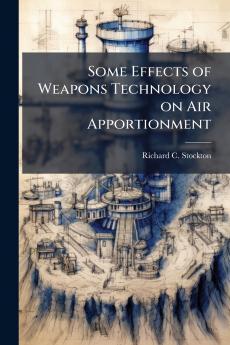
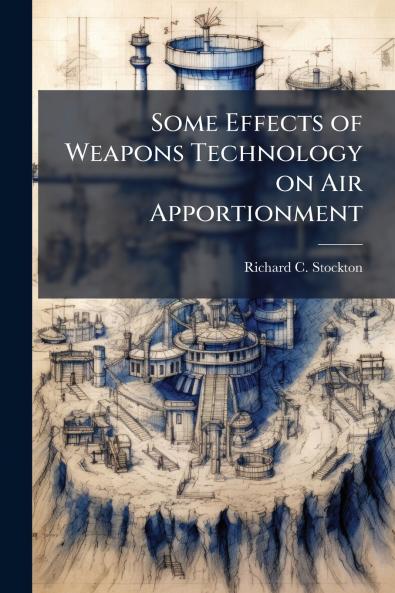
<p>Air apportionment is the joint force commander's tool for weighting his main and supporting efforts within the air operations supporting his campaign. It complements the targeting process by specifying how much effort is to be expended within each category. Consequently it comprises much of the operational art of airpower employment at the theater level. Past studies have centered on the doctrinal differences between the services on how airpower should be apportioned; that is on the apportionment decision. This monograph focuses on the apportionment process not its results. Discussion is restricted to the apportionment of combat airpower. The monograph explores the impact of advances in weapons technology on the apportionment process and asks if these advances necessitate changes in the apportionment process. It traces the evolution of the apportionment process through the Korean War Vietnam War and Operation Desert Storm. Current joint and U.S. Air Force doctrine on the subject are then discussed and its utility assessed by using Operation Allied Force as a case study. Three characteristics of an ideal apportionment process are postulated based on the historic and doctrinal review. Apportionment should be complete and thus able to identify apportion and utilize each relevant capability of available joint or multinational air forces. An apportionment process should also be efficient. That is is should waste little time facilitate quick accomplishment of its tasks and lend itself to automation for incorporation into battle management software suites. Finally it should be transparent. This characteristic views apportionment as a communication tool and requires the entire process to be visible and understandable to all actors. Two trends-advances in weapons systems and advances in weapons-are studied in detail. Friction points between each area and the apportionment process are explored and several solutions are proposed for each problem. These proposals</p><p>This work has been selected by scholars as being culturally important and is part of the knowledge base of civilization as we know it. This work was reproduced from the original artifact and remains as true to the original work as possible. Therefore you will see the original copyright references library stamps (as most of these works have been housed in our most important libraries around the world) and other notations in the work.</p><p>This work is in the public domain in the United States of America and possibly other nations. Within the United States you may freely copy and distribute this work as no entity (individual or corporate) has a copyright on the body of the work.</p><p>As a reproduction of a historical artifact this work may contain missing or blurred pages poor pictures errant marks etc. Scholars believe and we concur that this work is important enough to be preserved reproduced and made generally available to the public. We appreciate your support of the preservation process and thank you for being an important part of keeping this knowledge alive and relevant.</p>

Piracy-free

Assured Quality

Secure Transactions

Fast Delivery

Sustainably Printed
Details
ISBN 13
9781288321841
Publication Date
-21-11-2012
Pages
-62
Weight
-103 grams
Dimensions
-156x234x3.37 mm
