

English


₹1441
(All inclusive*)
Paperback
Delivery Options
Please enter pincode to check delivery time.
*COD & Shipping Charges may apply on certain items.
Review final details at checkout.
Looking to place a bulk order? SUBMIT DETAILS
Delivery Options
Please enter pincode to check delivery time.
*COD & Shipping Charges may apply on certain items.
Review final details at checkout.
About The Book
Description
Author
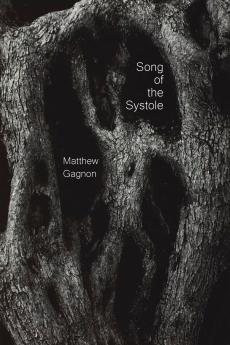
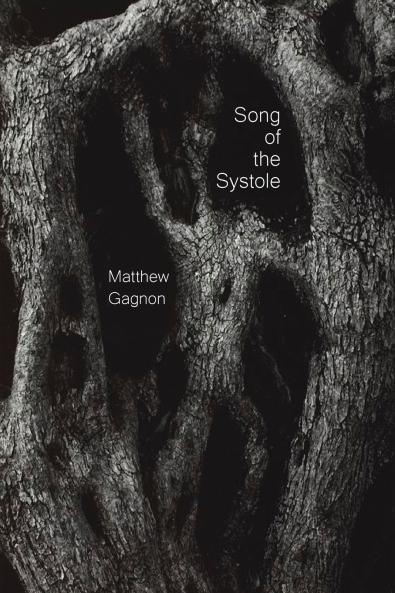
<p>Focused deeply on a language to navigate the outward space of the body the heart of these poems beats between want and its relief no matter how briefly it&rsquo;s obtained. Gagnon&rsquo;s poems forage find their bearings then sing out of the body&rsquo;s reorientation in a territory it is continuously desiring to understand they gallop &ldquo;as a flame / does against / the turbulence / of convictions.&rdquo;</p><p>&nbsp;&nbsp;&nbsp;&nbsp; Pam Rehm</p><p>These poems are fluent in the language of pool sky bath afternoon body earth&mdash;the way things pass into and out of the mind the way a bird&rsquo;s song can become: &ldquo;the slow ancient call of the bird/ in the distant flicker.&rdquo; Gagnon has much to say about how and where we find one another how and what we see in the field of the world&rsquo;s luminous circumstance. For the sheer dexterity of phrase the pleasure of perceiving and the music of quiet crescendo this is a book to be savored and read and savored again.</p><p>&nbsp;&nbsp;&nbsp;&nbsp; Mark McMorris</p><p>In ravishing language that blends ecstasis with visionary wonder Matt Gagnon&rsquo;s poems plumb the phenomenological terrain of our creaturely experience. &ldquo;This terra parches wonderment / and leaves us still and ghosted&rdquo; Gagnon writes and the work gathered here speaks to the serious introit of desire and ghostliness that limn our anthropomorphic selves. Forwarding Louis Zukofsky&rsquo;s &ldquo;upper limit music&rdquo; and the prescient romanticism of Robert Duncan&rsquo;s lyric address Gagnon masterfully weaves together the scales and signs of our worldly attention providing necessary evidence of the body&rsquo;s &ldquo;molecular advance twilit sheened abraded.&rdquo;&nbsp;Querulous ruminative distilling narratives from the molecular tide of diurnal experience Gagnon&rsquo;s haunting Song of the Systole asks &ldquo;Is it possible to love more than one world to see clear across to the other side?&rdquo;&nbsp;This beautiful book &ldquo;hounded by rituals of loss&rdquo; inscribes its pain-worn and joyous journey in an effort to make that crossing visible and audible to each of us.</p><p>&nbsp;&nbsp;&nbsp;&nbsp; Andrew Mossin</p>

Piracy-free

Assured Quality

Secure Transactions

Fast Delivery

Sustainably Printed
Details
ISBN 13
9781944682705
Publication Date
-01-10-2017
Pages
-82
Weight
-124 grams
Dimensions
-152x229x4.99 mm
