


English


Hardback
₹7765
₹9957
22.01% OFF
(All inclusive*)
Delivery Options
Please enter pincode to check delivery time.
*COD & Shipping Charges may apply on certain items.
Review final details at checkout.
Looking to place a bulk order? SUBMIT DETAILS
Delivery Options
Please enter pincode to check delivery time.
*COD & Shipping Charges may apply on certain items.
Review final details at checkout.
About The Book
Description
Author
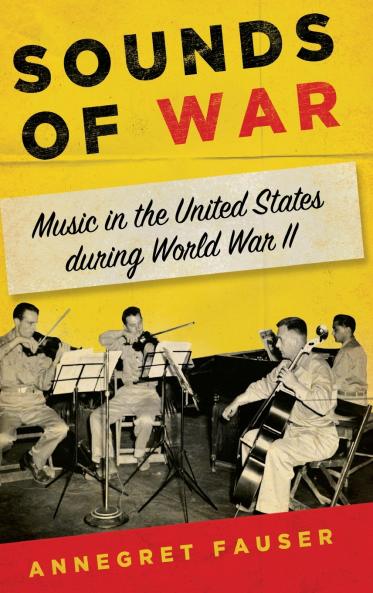
While music and musical life in Nazi Germany Vichy France Fascist Italy and Stalinist Russia have been widely explored concert music in the United States during World War II has remained markedly untouched. Music in this period - whether as an instrument of propaganda or as a means of entertainment recuperation and uplift - pervaded homes and concert halls army camps and government buildings hospitals and factories. Dinah Shore Duke Ellington and the Andrew Sisters entertained civilians at home and G.I.s stationed abroad with the sounds of swing and boogie-woogie. Yet it was the role assigned specifically to classical music that truly distinguished musical life in the wartime United States. Within U.S. spheres of influence during World War II American and exiled European musicians alike contributed actively and self-consciously to the war effort. Indeed on the day after Pearl Harbor Group Theatre director Harold Clurman wrote to his cousin Aaron Copland: So you''re back in N.Y. . . ready to defend your country in her hour of need with lectures books symphonies! Copland would be one of many classical composers deeply involved in the arts as part of the war effort. Marc Blitzstein Elliott Carter Henry Cowell Roy Harris and Colin McPhee were all mixed up with the propaganda missions of the Office of War Information (OWI); Samuel Barber served in the US Army Air Force writing both his Second Symphony and his Capricorn Concerto a rather tooting piece with flute oboe and trumpet chirping away and thus fit for the times as he assured a fellow composer. Civilian commissions for new music focused on patriotic and martial subjects most famously the series of fanfares that Eugene Goossens the chief conductor of the Cincinnati Symphony Orchestra requested from American composers and from European musicians in exile: Copland''s Fanfare for the Common Man is a still much performed result. Similarly the League of Composers (financed by the Treasury Department) commissioned numerous works on patriotic themes including Bohuslav Martin?''s Memorial to Lidice and William Grant Still''s moving In Memoriam: The Colored Soldiers Who Died for Democracy. Classical music was heard on the radio and in film scores; it was performed in the Armed Forces; and it even played a role in the work of the Office of Strategic Services (OSS; the predecessor to the CIA) whose director General Wild Bill Donovan was known not only to support experiments about music as a cipher code but also to involve himself in music-related affairs including the case of smuggling Shostakovich''s Seventh Symphony out of Russia. Classical music in 1940s America had a cultural relevance and ubiquitousness that is hard to imagine today and it played an important role as a cultural counterpoint to the military effort as musicians and politicians were-in Henry Cowell''s words-shaping music for total war. No other war mobilized and instrumentalized culture in general and music in particular so totally so consciously and so unequivocally as World War II. Through author Annegret Fauser''s in-depth engaging and encompassing discussion in context of this unique period in American history Sounds of War brings to life the people and institutions that created performed and listened to this music. The book will have wide-ranging appeal among a general readership interested in the study of culture and war as well as musicologists and historians studying World War II era America

Piracy-free

Assured Quality

Secure Transactions

Fast Delivery

Sustainably Printed
Details
ISBN 13
9780199948031
Publication Date
-21-05-2013
Pages
-386
Weight
-639 grams
Dimensions
-156x234x25.4 mm
