

English


Paperback
₹5069
(All inclusive*)
Delivery Options
Please enter pincode to check delivery time.
*COD & Shipping Charges may apply on certain items.
Review final details at checkout.
Looking to place a bulk order? SUBMIT DETAILS

Piracy-free

Assured Quality

Secure Transactions
About The Book
Description
Author
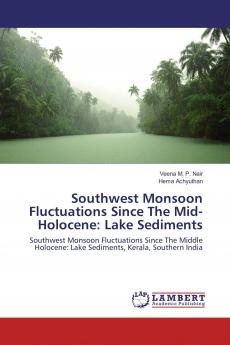
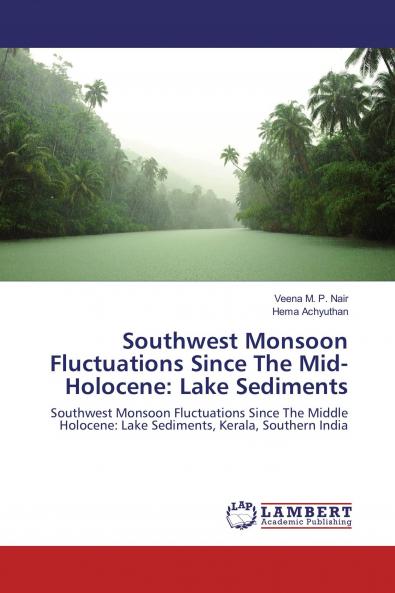
Freshwater bodies such as lakes and ponds are sinks and major depocentres that preserve signatures of geochemical and biological variations derived principally from the surrounding rocks and soils. Here we present the data collected on two lake sediment cores and lake floor sediment samples collected from Pookode and Vellayani Kerala South India. These lakes receive dominantly the southwest monsoon. Application of methods such as sediment texture geochemistry and palynology (pollen phytoliths) supported by radiocarbon ages reveal that since the middle Holocene period the intensity of the southwest monsoon declined.The Pookode lake data reveals that during the overall dry phase since the middle Holocene period (6240 yrs BP) to present very wet intervals of short duration occurred caused by intense southwest monsoon. This resulted in water levels to rise and the lake margins expanded over the surrounding low-lying region but contracted during the long dry phases. Medieval warm period and the Little Ice Age are represented in the lake sediment cores indicating warm and dry conditions with low rainfall during these times.
Piracy-free
Assured Quality
Secure Transactions
Delivery Options
Please enter pincode to check delivery time.
*COD & Shipping Charges may apply on certain items.
Review final details at checkout.
Details
ISBN 13
9783330026377
Publication Date
-19-01-2017
Pages
-188
Weight
-250 grams
Dimensions
-150x220x10.26 mm
