


English


Hardback
₹18021
₹23107
22.01% OFF
(All inclusive*)
Delivery Options
Please enter pincode to check delivery time.
*COD & Shipping Charges may apply on certain items.
Review final details at checkout.
Looking to place a bulk order? SUBMIT DETAILS
Delivery Options
Please enter pincode to check delivery time.
*COD & Shipping Charges may apply on certain items.
Review final details at checkout.
About The Book
Description
Author
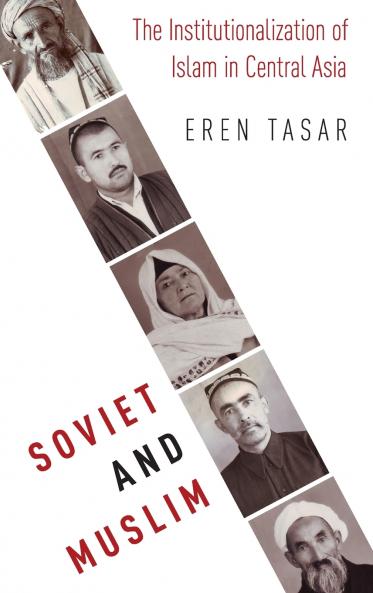
Central Asia was the sole Muslim region of the former Russian Empire that lacked a centralized Islamic organization or muftiate. When Soviet leader Joseph Stalin created such a body for the region as part of his religious reforms during World War II he acknowledged that the Muslim faith could enjoy some legal protection under Communist rule. From a skeletal and disorganized body run by one family of Islamic scholars out of a modest house in Tashkent's old city this muftiate acquired great political importance in the eyes of Soviet policymakers and equally significant symbolic significance for many Muslims. <p/>Relying on recently declassified Central Asian archival sources most of them never seen before by historians Eren Tasar argues that Islam did not merely survive the decades from World War II until the Soviet collapse in 1991 but actively shaped the political and social context of Soviet Central Asia. Muslim figures institutions and practices evolved in response to the social and political reality of Communist rule. Through an analysis that spans all aspects of Islam under Soviet rule-from debates about religion inside the Communist Party to the muftiate's efforts to acquire control over mosques across Central Asia changes in Islamic practices and dogma and overseas propaganda targeting the Islamic World-<em>Soviet and Muslim</em> offers a radical new reading of Islam's resilience and evolution under atheism.<br>

Piracy-free

Assured Quality

Secure Transactions
Details
ISBN 13
9780190652104
Publication Date
-01-12-2017
Pages
-432
Weight
-702 grams
Dimensions
-156x234x23.81 mm
