


English




Paperback
₹985
₹1339
26.44% OFF
(All inclusive*)
Delivery Options
Please enter pincode to check delivery time.
*COD & Shipping Charges may apply on certain items.
Review final details at checkout.
Looking to place a bulk order? SUBMIT DETAILS

Piracy-free

Assured Quality

Secure Transactions
About The Book
Description
Author
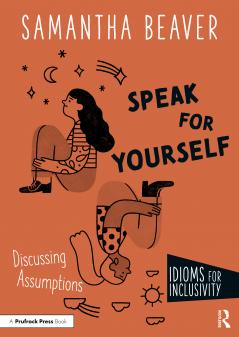
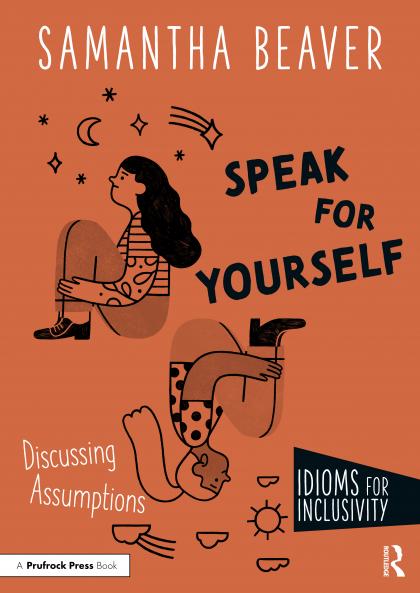
<p>To get the complete <b>Idioms for Inclusivity</b> experience this book can be purchased alongside four others as a set <b><i>Idioms for Inclusivity: Fostering Belonging with Language</i> 978-1-032-28635-8</b>.</p><p>Informed by sociolinguistic research yet written accessibly <i>Speak for Yourself</i> challenges readers to investigate the concept of assumptions as it relates to both language-use and inclusivity.</p><p>This engaging and delightfully illustrated book invites students to engage with concepts such as:</p><ul> <p> </p> <li>the cultural meaning of the idiom speak for yourself and how it can act as a helpful warning against harmful assumptions</li> <p> </p> <li>Presuppositions – a concept developed by linguists to research and understand assumptions in language</li> <p> </p> <li>why the expectation to speak for yourself can make someone feel excluded</li> <p> </p> <li>and how understanding the way language works can help us learn to be more inclusive</li> </ul><p>Featuring practical inclusivity tips related to integrating learning into daily conversations this enriching curriculum supplement can be used in a Language Arts setting to learn about figurative language; in a Social Studies setting to discuss diversity equity inclusion and belonging; or as an introduction to linguistics for students ages 7-14.</p>
Piracy-free
Assured Quality
Secure Transactions
Delivery Options
Please enter pincode to check delivery time.
*COD & Shipping Charges may apply on certain items.
Review final details at checkout.
Details
ISBN 13
9781032286389
Publication Date
-28-02-2023
Pages
-36
Weight
-115 grams
Dimensions
-210x297x2.45 mm
