


English


Paperback
₹1689
₹1853
8.85% OFF
(All inclusive*)
Delivery Options
Please enter pincode to check delivery time.
*COD & Shipping Charges may apply on certain items.
Review final details at checkout.
Looking to place a bulk order? SUBMIT DETAILS
Delivery Options
Please enter pincode to check delivery time.
*COD & Shipping Charges may apply on certain items.
Review final details at checkout.
About The Book
Description
Author
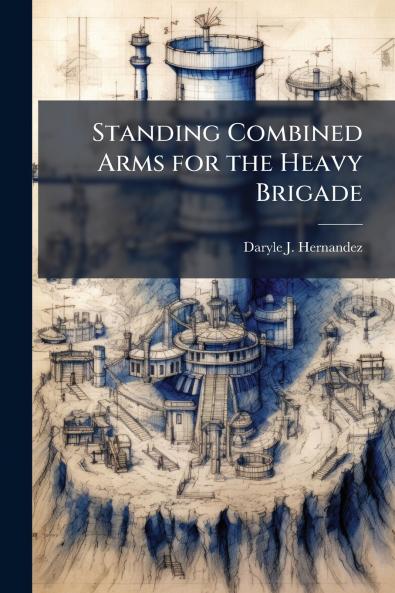
<p>The past ten years in the absence of a peer threat have focused on technology and capitalizing on efficiencies. The prospects for future operations as part of the War on Terrorism the continued refinement of the Interim Brigade and the decision to imbed combined arms at some level within the Objective Force present unique challenges and opportunities. Recent events suggest that the United States Army ought to explore ways to increase effectiveness by addressing substantive organizational change in its current heavy brigades. This monograph proposes such a look. It seeks to answer the question of whether the U.S. Army should restructure heavy brigades into standing combined arms organizations. Investigation begins with a systems level approach that considers organization theory. It determines that a standing brigade combat team provides advantages in division of labor coordination and decentralization that provide greater flexibility and adaptability. Specifically the standing brigade is more versatile agile and characteristic of a complex adaptive system than the current method of task organization. In order to provide a more holistic treatment of the subject this work also looks at the human element by considering cohesion. It determines that cohesion can be found at and developed in larger organizations such as the brigade. With this established it determines that the standing brigade concept promotes those structural and situational factors that hold the promise of increasing cohesion to a greater extent than does the current task organized brigade. This monograph concludes that the U.S. Army should restructure its heavy brigades into standing combined arms organizations. It recommends a heavy brigade organization that incorporates an artillery battalion an engineer battalion a forward support battalion and a military intelligence company as organic assets. It considers the implications of this for the division and suggests ways of mitigating some dis</p><p>This work has been selected by scholars as being culturally important and is part of the knowledge base of civilization as we know it. This work was reproduced from the original artifact and remains as true to the original work as possible. Therefore you will see the original copyright references library stamps (as most of these works have been housed in our most important libraries around the world) and other notations in the work.</p><p>This work is in the public domain in the United States of America and possibly other nations. Within the United States you may freely copy and distribute this work as no entity (individual or corporate) has a copyright on the body of the work.</p><p>As a reproduction of a historical artifact this work may contain missing or blurred pages poor pictures errant marks etc. Scholars believe and we concur that this work is important enough to be preserved reproduced and made generally available to the public. We appreciate your support of the preservation process and thank you for being an important part of keeping this knowledge alive and relevant.</p>

Piracy-free

Assured Quality

Secure Transactions

Fast Delivery

Sustainably Printed
Details
ISBN 13
9781288322343
Publication Date
-21-11-2012
Pages
-64
Weight
-106 grams
Dimensions
-156x234x3.47 mm
